

Shuckstack #29
June 2025

Ada Speaks
My Dearest and Dimmest,
A curse upon June. There, I have said it.
The year turns, and the pendulum swings not in our favour. The nights, my precious, patient nights, shrink like salted slugs, and the days swell obscenely, bloated with sunshine and gaiety. How vulgar. Midsummer approaches with all the subtlety of a brass band at a funeral, and everywhere I turn I am affronted by golden light, laughing children, and - most offensively - optimism.
The sun rises before I have properly finished brooding and does not deign to set until nearly tomorrow. What am I to do, I ask you, when the shadows are pushed into corners like disobedient servants and the moon is nothing but a washed-out wisp? Even the owls seem annoyed. It is an intolerable situation for those of us committed to sorrow.
Oh yes, you may celebrate your solstice, your Litha, your honeyed teas and sunflower wreaths. You may dance barefoot like lunatics in meadows thick with insects and hope. I shall not stop you. But know this: the longest day is but a turning point: from here, the light begins, imperceptibly, deliciously, to die.
And what of St John’s Wort, that blazing, infernal little weed that dares bloom in June with all the enthusiasm of a street performer thrown a farthing? Burn it if you must, rub it on your doorways, slip it beneath your pillows, none of it will shield you from the truth that the earth spins ever toward its grave. I find no comfort in its golden smile, no magic in its blood-red oil. It is the flower of fools.
The living world shouts now, thrumming with bees, with festival, with fire. But I, dear reader, am not of the living. I am of dust and silence, of sighs behind the wainscot and footsteps where there should be none. I belong to the hush between the chimes of midnight, to the damp underside of stone, to the flicker that snuffs out the candle.
Still, I linger. Watching. Listening. Waiting.
And if, during your solstice merriments, you find the air turn suddenly cold, or see the shadow of someone who ought not be there, do not trouble yourself to look behind you. It will already be too late. In the meantime, I will continue my essential work for the Society for the Repeal of Daylight.
Ever yours in darkness and disdain,
Ada
The stench of death that overwhelmed Ketteringham
It was a scandal that left the sweet air of Ketteringham cloyed with the unmistakable scent of death.
In 1853, under the veil of night and secrecy, Sir John Boileau of Ketteringham Hall ordered the unthinkable: six long-buried souls, laid to rest beneath the chancel of the parish church of St Peter, were exhumed by torchlight.
Their sin? Simply lying in the way of Sir John's wife, who was gravely ill and who required a sacred resting place: and no spot was holier than the sanctuary beneath the altar.
But even the dead protest when disturbed.
Within hours, the village filled with whispers.
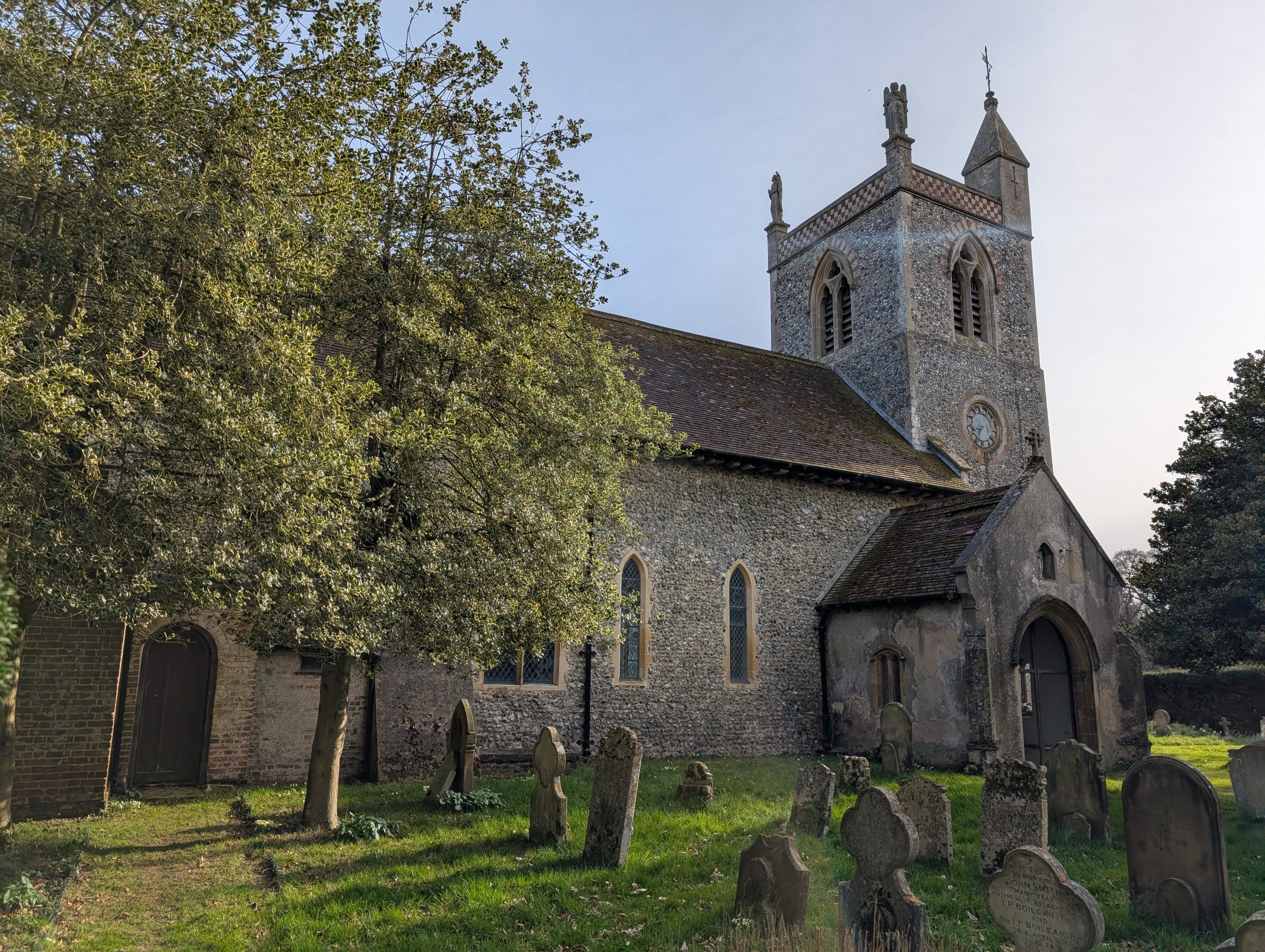
Reverend Wayte Andrew, the church’s incumbent, noted the horror in his diary: “The stench in the church was insufferable. The long-pent odour of death, released after so many years, hung about the pews like a miasma. The matter could not be hid. Before many hours had passed, the entire village knew what had been done.”
Worshippers gagged through services, heads bowed less in reverence than in revulsion and the sanctuary, once a sanctified space, became something fouler, polluted not only by physical decay but by the moral rot of entitlement.
Relatives of the disinterred were outraged - letters were written and eventually, the Dean of Norwich intervened, ordering Sir John to reverse his desecration.
And so, with reluctant hands, the remains were returned to their rightful place: or as near to it as possible.
Chastened, but not defeated, Sir John turned to stone for his next move.
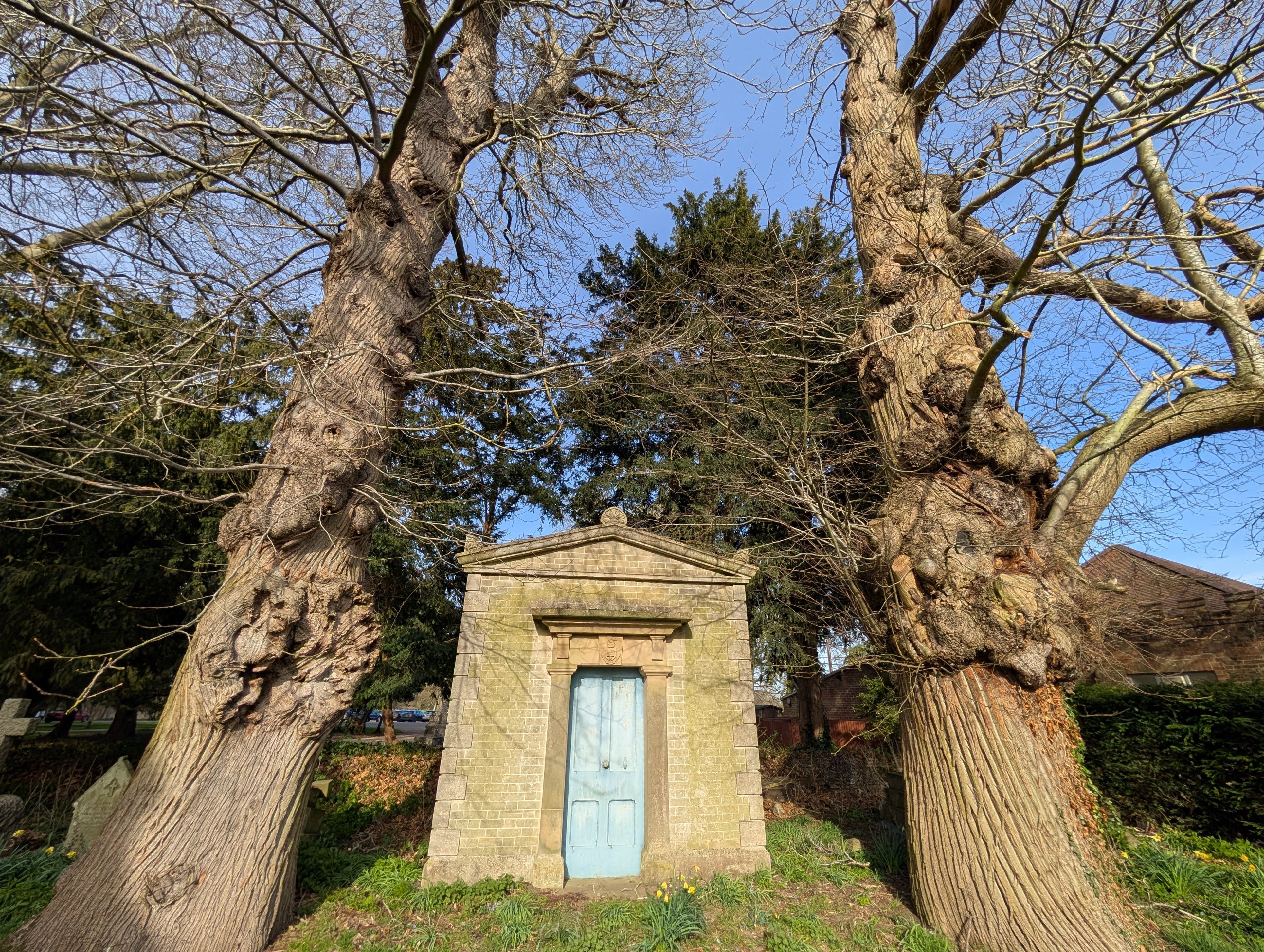
A mausoleum was erected in the churchyard, a lasting monument to pride and penance, housing first his ailing wife and later, himself.
The building still stands: a curious edifice amid the lichen-spotted gravestones, its presence a quiet reminder that privilege has always had its own architecture.
The story is told with haunting clarity in Victorian Miniature by Owen Chadwick, which entwines the diaries of Sir John and Reverend Andrew in a clash of class, conviction and crumbling coffins.
What emerges is not just a local scandal, but a vivid portrait of Victorian village life: the deference, the dissent, the quiet wars waged between rectory and hall.
St Peter’s Church itself is a jewel box of memory.
Its interior, carved and coloured with devotion, is crammed with monuments to lives long passed. One wall bears the name of Charlotte Atkyns, a Drury Lane actress turned would-be saviour of a queen.
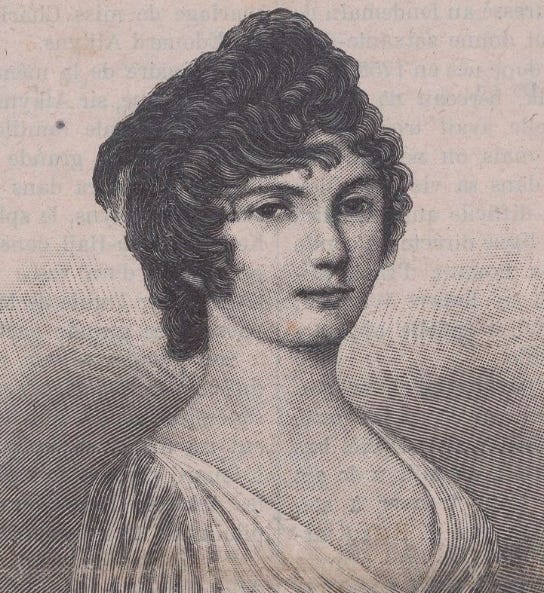
Legend insists she was a close friend of Marie Antoinette and made three daring attempts to rescue the monarch from the shadowy confines of the Conciergerie during the French Revolution.
Her missions failed and the Queen met the guillotine in 1793, and Atkyns faded into genteel obscurity here in Norfolk, her tale written in marble among the local dead.
In Ketteringham, history clings to every stone, but never more tightly than when the stones are disturbed.
The Magic of St John’s Wort
As summer reaches its zenith, hedgerows and roadsides glow bright yellow with Hypericum perforatum—better known as St John’s Wort.
This unassuming “wort” (from Old English for “plant”) is far more than a common weed: it carries the warming power of the sun, cleanses spiritual shadows, and whispers of midsummer magic in every golden bloom.
St John’s Wort reliably flowers around June 24th, the Feast of St John the Baptist.
In Celtic tradition it’s called sol terrestis, the “terrestrial sun,” its radiant blossoms mirroring the solstice sun at its highest.
During Midsummer celebrations, households would hang sprigs over doorways, windows, and even religious icons, to ward off demons, invite blessings, and claim the plant’s purifying energy.
On St John’s Eve, revellers would toss bundles of the herb into bonfires and, for the daring, leap through the flames, to purify body and spirit.
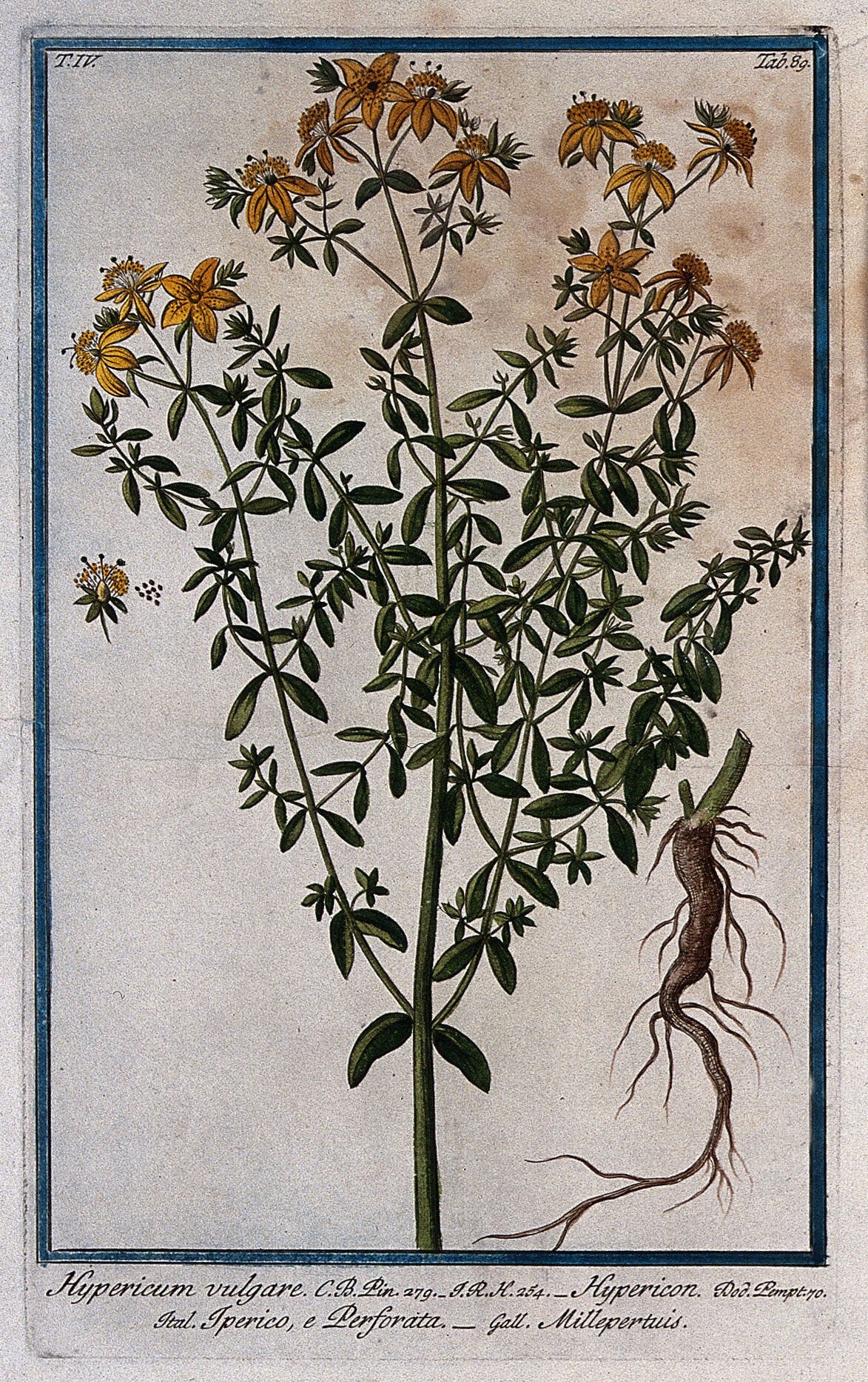
Others wove nine-flower bouquets (always including St John’s Wort from nine different locations) and slipped them beneath their pillows; Swedish legend held that the sleeper would dream of their future beloved.
Meanwhile, German huntsmen anointed their arrows with the herb’s crimson oil, aptly nicknamed “St John’s Blood”, to ensure unerring marksmanship.
Folklore also casts St John’s Wort as a protector against mischievous faeries and malicious witches, thought most active at midsummer.
Wanderers venturing into dense woods would carry sprigs to safeguard against faerie trickery, while homebound folk rubbed door frames with its oil to seal out curses.
Today, many still anoint dice for luck or swipe the red-tinted oil on doorposts to banish bad fortune.
Beyond its magical cachet, St John’s Wort boasts a storied medical heritage. Medieval herbalists prescribed it for “madness”; modern practitioners brew its flowers into teas, tinctures, and oils for anxiety, depression, nerve pain, and skin ailments. Within those sunny petals reside glycosides (including the red‑pigmented hypericin), flavonoids, tannins, and volatile oils that bring both soothing relief and mystical allure.
Harvesting St John’s Wort is an act of respect: for the plant and its pollinators.
If you spot a hedge heavy with buds, gather just a few stems at dawn, leaving plenty for the bees that adore its nectar.
Bundle your cuttings to dry for teas, or steep them in oil: watch the infusion deepen from gold to crimson, as if stained by the very blood of its namesake.
Today, St John’s Wort reminds us that magic often thrives in plain sight.
A roadside “weed,” yet steeped in centuries of solstice rites, saintly lore, and healing traditions, it bridges the mundane and the mystical.
This June, pause when you see those glowing flowers. Hang a spray by your door for protection, press a bloom into your journal of curiosities, or brew a cup of St John’s Wort tea at sunrise and taste both herbal warmth and that ancient promise: wherever St John’s Wort blooms, light and safeguarding follow close behind.
11 magical things to do for Litha
Litha – or the Summer Solstice – falls around June 21, the longest day of the year. It’s a time of full bloom, fiery energy, and ancient celebration.
The sun is at its peak, the wheel of the year has turned to its brightest moment, and the world is bursting with life.
Midsummer is a time to honour abundance, passion, protection, and joy—whether with a garden feast, a kitchen spell, or a late-night wander through the wild.
1. Welcome the sun: Get up early and greet the dawn—bonus points if you do it barefoot in the dewy grass or at the place where the sun reaches the east first, at East Point on Lowestoft beach.
2. Make a solar wheel: Craft your own sun symbol using willow or foraged sticks tied into a circle. Decorate with yellow and orange ribbons, sunflowers, lavender, and dried citrus. Hang it on your door or above your altar.
3. Feast: Eat with the season: strawberries, honey, leafy herbs, edible flowers, fresh bread, and fiery foods (think chilli or ginger). Make honey cakes or lemon posset, or serve up a garden picnic with homemade elderflower cordial or a glass of mead.
4. Brew a sunshine potion: Make a solar tea by placing lemon balm, mint, calendula, or chamomile in water and leaving it to infuse in the sunlight for a few hours. Sip slowly with intention: Litha is about joy, clarity, and personal power.
5. Visit a standing stone or sacred site: Stone circles were ancient observatories of the sun. In Norfolk, you can visit the site Henge at Holme or make your way to Bloodgate Hill Iron Age fort near South Creake for a dose of sun-kissed, timeworn magic.
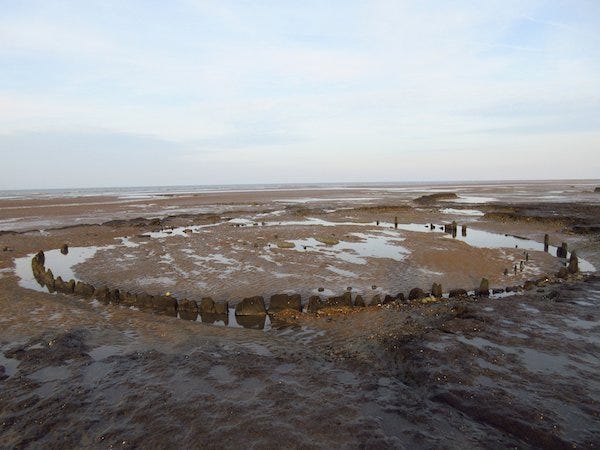
6. Make a flower crown: Think midsummer blooms: roses, honeysuckle, daisies, and elderflowers. Wear it with pride or lay it on your altar.
7. Light a candle and set a solstice intention: If you can't light a bonfire, a single flame will suffice. Sit in stillness, focus on the flame, and speak your intention aloud for the months ahead. Litha is a good time to harness energy for courage, creativity, and confidence.
8. Go herb gathering: Traditionally, herbs harvested at Litha are at their most potent. St John’s Wort, yarrow, thyme, and mugwort are all associated with midsummer magic. Dry them for incense, teas, or spell jars. (Always forage with permission, and never take more than you need.)
9. Leave a gift for the fae: The veil to the Otherworld shimmers again at Litha. Leave a tiny offering - berries, bread, honey, a shiny coin - at the base of an old tree or in a hollowed-out stone. Just don’t look back once you’ve left it…
10. Create a dream charm: Midsummer nights are ripe for vivid dreams and messages. Tuck mugwort or lavender into a small pouch and place it beneath your pillow. Ask for clarity or guidance as you sleep—then write down what you remember come morning.
11. Watch for the Wild Hunt: Though often associated with darker months, there are tales of the Wild Hunt riding out on solstice nights, charging across the skies in search of wayward spirits and wandering souls. Listen for hooves, howls, and the beat of phantom wings over a sleeping Norfolk.
Solstice blessings to all who walk in light and shadow—may your midsummer be golden and a little bit wild.
From the whispers of history and the shadows of time, we bring you Shuck 7: Witches.
And what a magnificent collection of treasures it is – learn about witch bottles and witch stones, the very last witch trial in Norfolk (held during World War 2), the Kittywitches of Great Yarmouth and how to make your own witch cake. A warning: the witch cake will require the collection of urine.
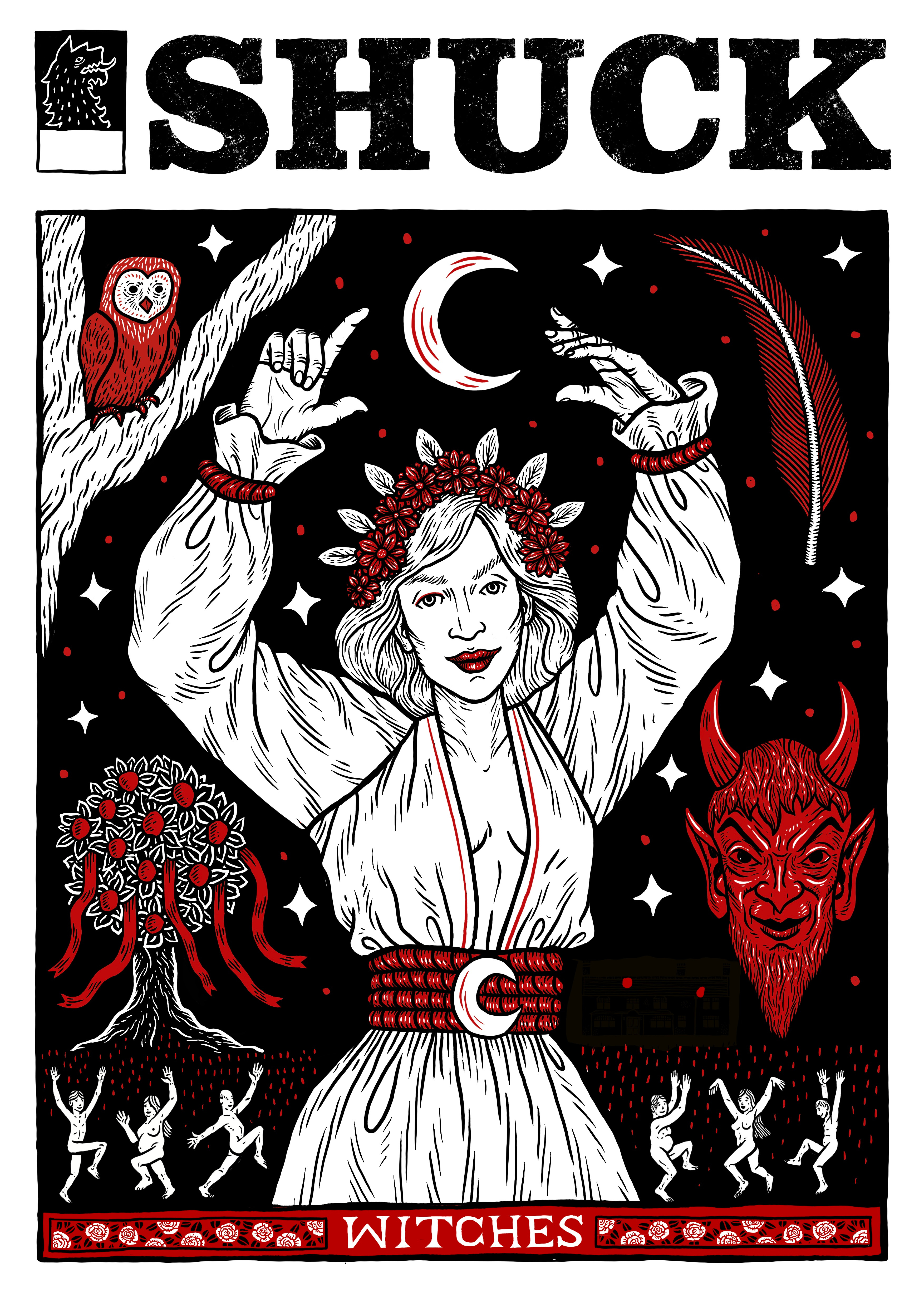
There are stories of farmers and witches, a witch’s curse that cast a shadow over a Norfolk village for centuries and see the Witch of East Somerton (we know her name but will not share).
Then we have a map of Norfolk witches, a spell to bring magic to you and your home, we learn of Norfolk’s male witches and follow the county’s first witch trial where two ‘hill hunters’ were accused of enchantment. Then there are familiars, Toadmen, your own paper doll witch and our cover story, that of Monica English, Norfolk’s High Priestess of the Grey Goose Feather Coven who practised until only a few decades ago. Let us welcome you in:
Shuck’s latest creation awaits you HERE.
PS Work continues on Shuck 8. Guess the theme, friends.
Stonehenge: 13 Strange Truths for the Summer Solstice
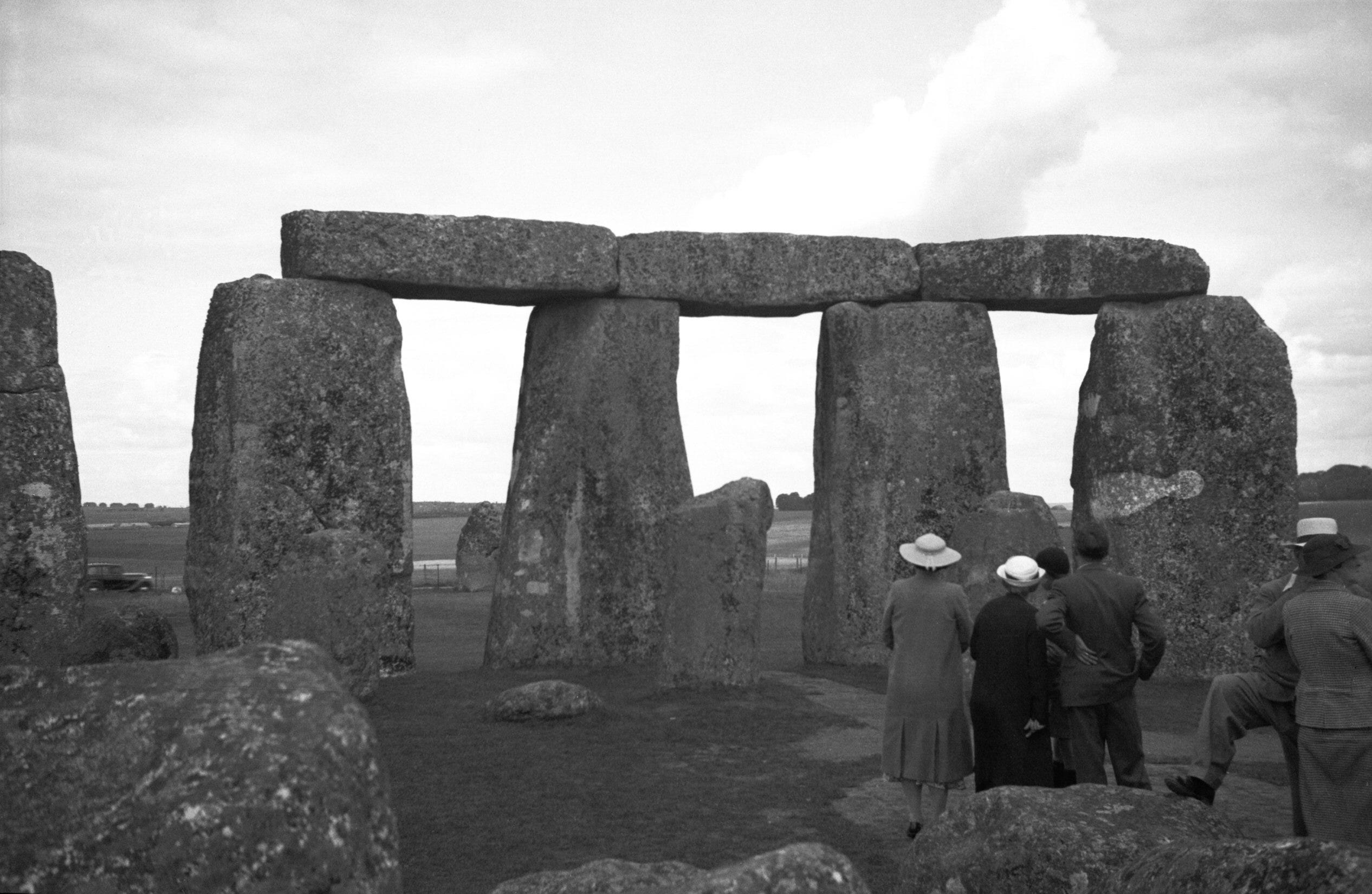
1. It hums when you hit it: Some of Stonehenge’s boulders are ‘ringing rocks’. Strike them just right and they emit a loud, resonant chime—ancient soundscape or Bronze Age xylophone? Some believed the vibrations had healing powers. Part of it’s missing—and it’s on purpose.
2. Many of the stones are buried: Stone 56, one of the tallest, stands at 6.58m but actually extends a further two metres underground. Like ancient icebergs.
3. You’re not allowed to touch it: but everyone already has: Stonehenge is scarred with graffiti from every era: Bronze Age dagger shapes, medieval mason’s marks, and even Christopher Wren’s signature. Victorian visitors could rent a chisel and take home a chunk. Geology tourism at its worst.
4. Blake saw death, Hardy saw doom: William Blake called it “a building of eternal death.” Thomas Hardy set Tess of the D’Urbervilles’ final night of freedom among the stones. Not exactly glowing reviews on TripAdvisor.
5. It once hosted cricket matches and choir practice: Victorians treated Stonehenge like a particularly scenic park. Day-trippers held concerts among the trilithons, cyclists picnicked under the sarsens, and Sunday school children played ‘it’ between the lintels.
6. It sings of sun and moon - but so does Bath: The Georgian masterpiece, The Circus in Bath, was inspired by Stonehenge’s circular layout. Local legend claims the Circus represents the sun, while the nearby Royal Crescent mirrors the moon
7. Royalist hideout: Charles II allegedly passed through Stonehenge while fleeing after the Battle of Worcester in 1651. The ancient stones took on Royalist symbolism, akin to the oak tree that sheltered him.
8. Stonehenge vs the State: The Battle of the Beanfield: In 1985, police violently clashed with New Age travellers en route to hold the Free Festival at the stones. Vehicles were smashed, bones broken. The stones stood silent as ever.
9. There are 1,300 stone circles in the UK: From Orkney’s Brodgar to Cornwall’s Merry Maidens, the UK is littered with prehistoric rings. But none have the brooding magnetism of Stonehenge. It’s the Beyoncé of stone circles. The headliner.
10. A gynaecologist once said it was a giant vulva: In 2003, Dr Anthony Perks proposed that Stonehenge was a fertility symbol shaped like female anatomy. His article was titled The Vagina Monoliths. Not universally embraced by scholars, but memorable.
11. It’s older than the pyramids: Stonehenge’s first phase predates the Great Pyramid of Giza. It’s been a burial site, observatory, calendar, temple, rave spot and tourist trap. Or maybe all of the above. Or none. It remains unsolved. And we love it for that.
12. It’s aligned with the solstice: On Midsummer’s day, the sun rises through the Heel Stone and floods the centre of the monument with light. On Midwinter’s day, the sun sets in near-perfect symmetry.
13. It’s always been a place of power and performance: From Druid ceremonies to countercultural raves, solstice rituals to royal hideaways, Stonehenge endures as a theatre of the uncanny. And while we can no longer touch the stones, they still touch us - with awe, wonder, and weirdness.
Places we wish we could have visited in Norfolk: The prison where Norwich’s first ‘private’ execution took place
Perhaps not the most idyllic day trip, it would have been fascinating to look at the Norwich City Gaol and House of Correction which once stood where St John the Baptist Cathedral is today.
The gaol opened in 1826 and prisoners from the Bridewell in the parish of St Andrew (now the Museum of Norwich on Bridewell Alley) were taken there when the Bridewell became a tobacco and snuff factory.
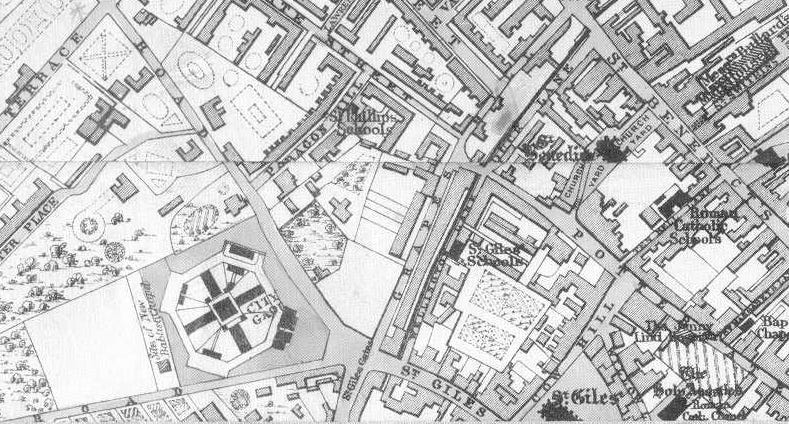
The prison had airing yards, three treadmills and a place of execution. Six of the airing yards were sunk three feet below the others so the governor could see them all from the ‘inspecting gallery’ of his house.
William Sheward, who confessed to murdering his wife and then depositing her body parts across Norwich, was given the city’s first ‘private’ execution behind the prison walls on April 20 1869 – but a crowd of 2,000 still arrived to see the black flag raised to signal that Sheward was dead.
The gaol was closed in May 1878 and prisoners were moved back to Norwich Castle – the cathedral was built shortly afterwards.