

Shuckstack #37
April 2026

A letter from Ada Nemesis
My prematurely optimistic correspondents,
April arrives not with gentleness, as you will insist upon claiming, but with a kind of calculated charm, the sort that suggests improvement while keeping a hand quietly on the latch of winter.
You will notice the light first, how it lingers a little longer in the evenings, stretching itself thin across fields that are still undecided, still holding damp in their bones.
You will call this progress. You will say, with gathering confidence, that spring has arrived, as though it were a guest who had committed to staying.
It has not.
What April offers is not certainty, but suggestion. A softening at the edges, a loosening. The occasional warm afternoon slipped, almost apologetically, between days that return you briskly to your senses.
You will respond, as you always do, with optimism disproportionate to the evidence: coats will be abandoned too early, windows opened with theatrical intent, outdoor plans made, declarations issued and then, inevitably, revised.
The hedgerows, however, are less easily persuaded.
They proceed with caution, unfurling leaf by tentative leaf, as though aware that any show of enthusiasm may be punished. Blossom appears, yes, but with a certain restraint, as though it has read the small print.
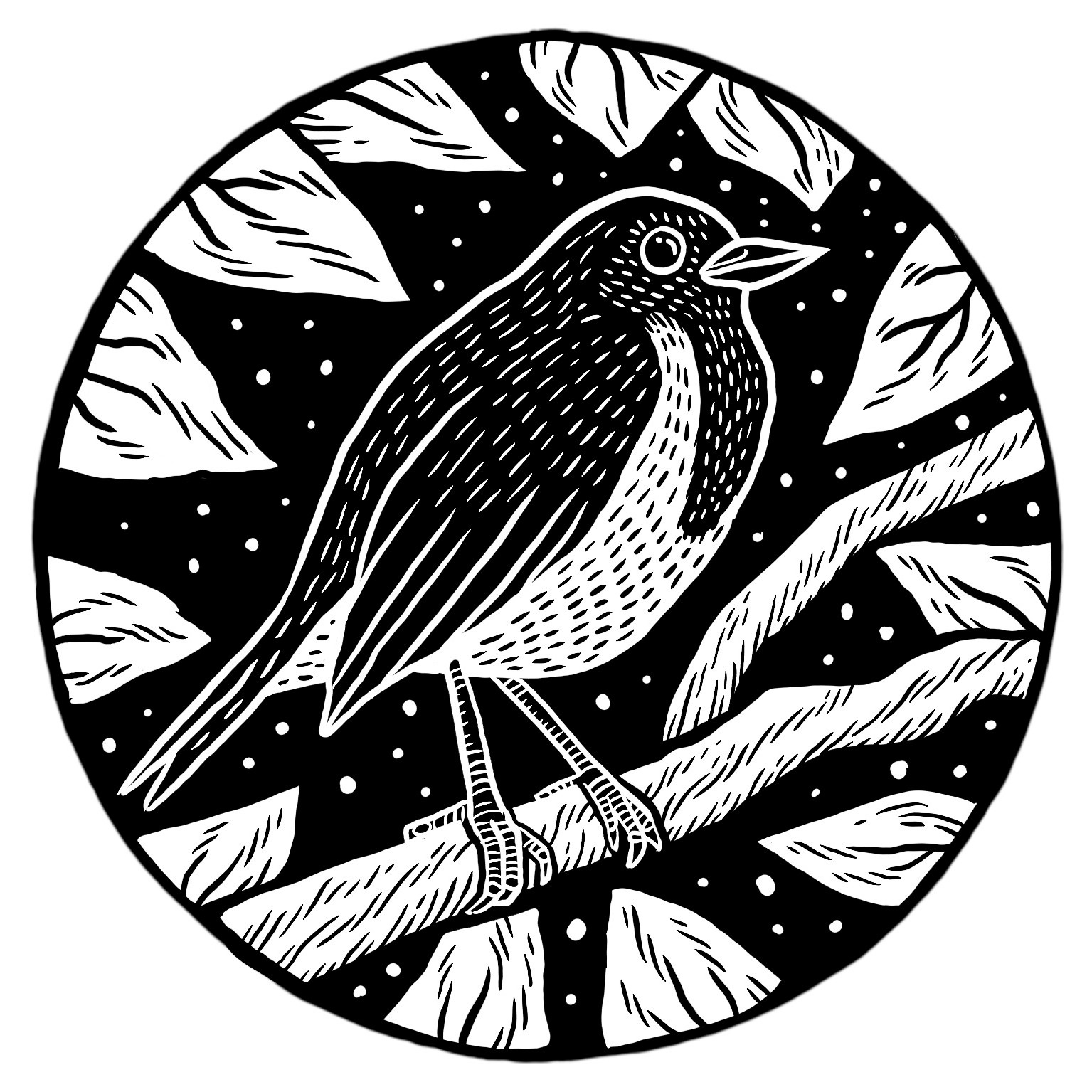
Even the birds, those tireless propagandists for the season, hedge their bets, singing with one eye on the sky.
And yet, despite all this, there is a shift.
Not a transformation, not the triumphant arrival you would prefer, but a gathering. A quiet accumulation of light, of colour and of small permissions.
The ground, which has resisted you for months, begins, reluctantly, to yield. Paths re-emerge, air moves differently and something, not yet named, begins to organise itself.
You will feel it, and because you are human, you will trust it. This is your perennial error.
April is not a promise. It is an overture. A testing of instruments before the full performance begins and one in which the possibility of discord remains very much on the table.
Proceed, therefore, with measured enthusiasm. Carry your tinted spectacles, certainly, but do not stray far from your coat. Admire the blossom, but do not assume its permanence. Accept the light, but do not yet rely upon it.
Spring is considering you and has not yet decided what it has in store for you.
Yours, with restrained encouragement,
Ada Nemesis
Blackthorn: blossom and bone
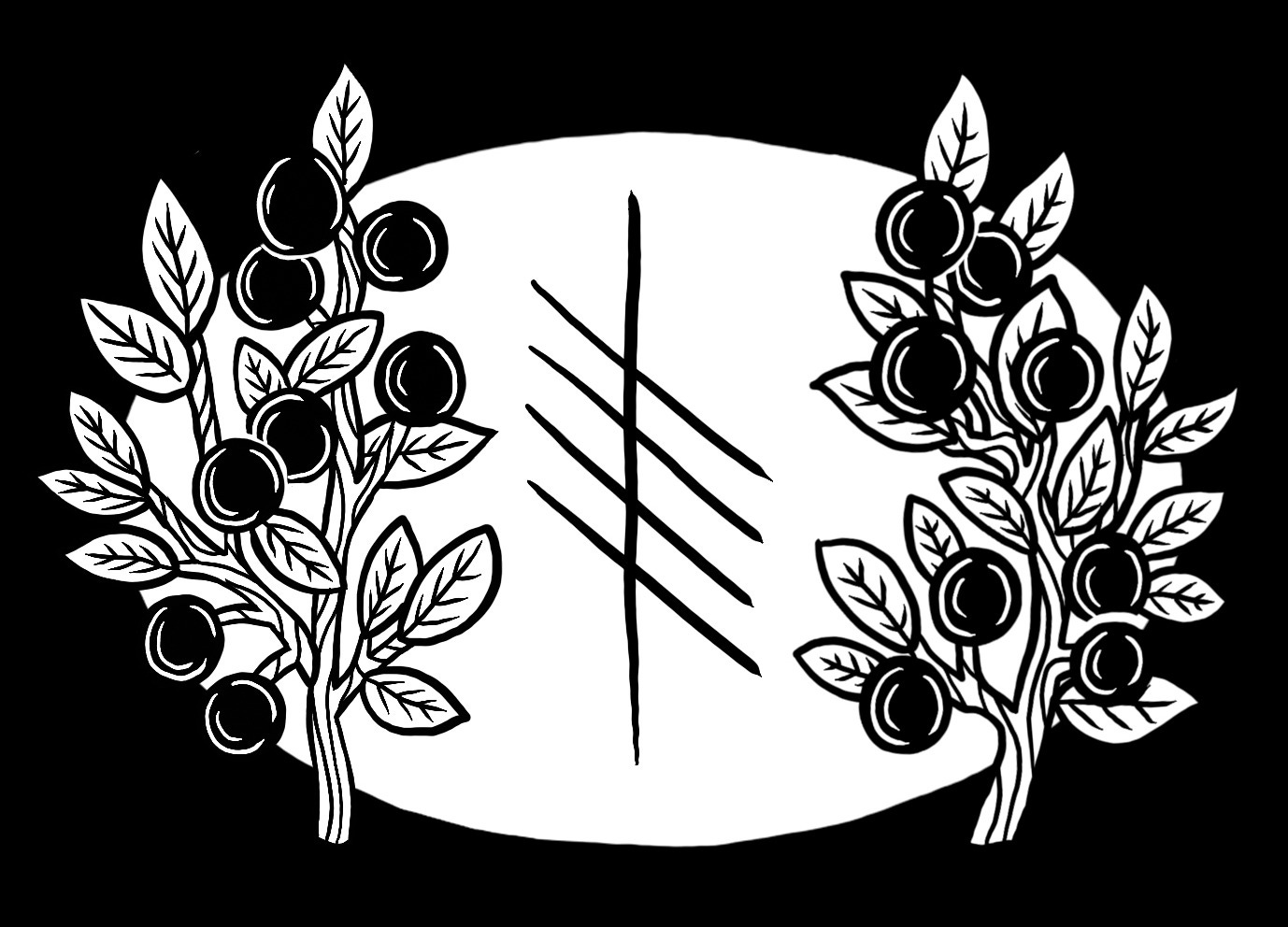
In April, when the hedgerows begin to loosen and the countryside allows itself, cautiously, to soften, blackthorn steps forward in white.
It does not arrive gently.
Its blossom appears before its leaves, a sudden spangling of pale flowers scattered across branches that remain otherwise dark and unyielding, as though winter itself has been briefly dusted with sugar.
From a distance, it reads as lightness, as promise, as something almost celebratory, but up close, the truth asserts itself.
Blackthorn is a tree of edges. Its branches are armed with long, unforgiving thorns, its wood dense and difficult, its presence less welcoming than watchful.
The blossom, for all its brightness, does not soften the structure beneath it but merely veils it, a momentary grace laid over something far older and less inclined to kindness.
In folklore, blackthorn belongs firmly to the darker half of the year.
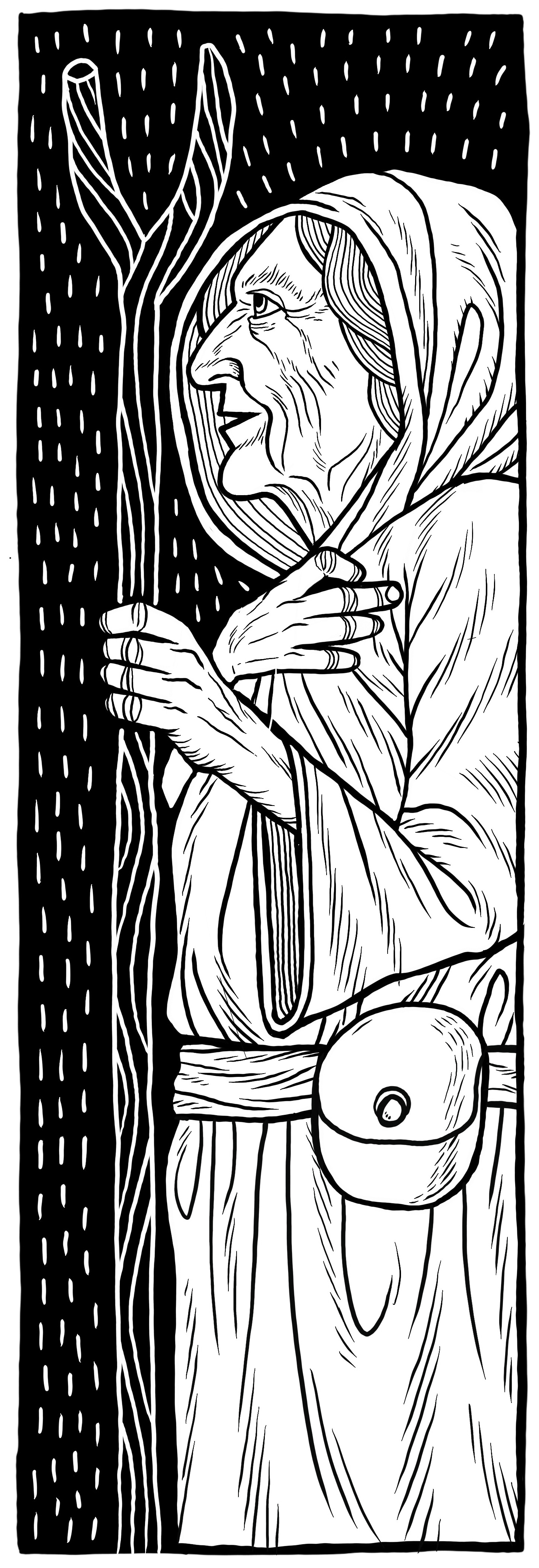
It is often called the Mother of the Woods, not in any comforting sense, but as something ancient and governing, aligned with the Cailleach, the winter hag who shapes the land with a blackthorn staff, striking the ground into frost.
It is a tree of boundaries and thresholds, associated with the Crone, with endings, with the necessary severity that precedes change.
Its thorns made it useful in less gentle practices.
Blackthorn sticks were carried as protection, but also as instruments of conflict, shaped into Irish shillelaghs or, in quieter traditions, into wands said to hold a sharper kind of magic.
It was a tree both feared and relied upon, capable of warding off harm while never quite relinquishing its own. Even its flowering carries a warning.
The sudden cold snap that often follows its bloom is known as the blackthorn winter, a brief and bitter return of frost that arrives just as the land begins to trust in warmth.
It is a reminder, neatly timed, that the season has not yet settled, that softness can be interrupted. And still, it flowers.
A scatter of white against dark wood, a brightness that does not erase what lies beneath but reveals it more clearly.
Blackthorn does not pretend to be gentle, it offers instead a kind of stark beauty, one that understands that growth does not arrive without resistance and that even in spring, something of winter remains.
The mad monk of Morley
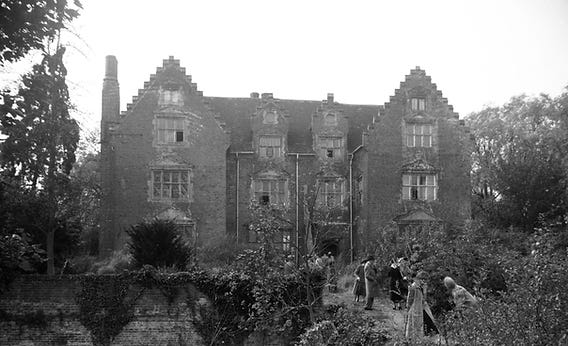
On 24 August 1964, viewers of Anglia Television settled down to watch a calm and methodical programme about ghost hunting, filmed at Morley Old Hall, a moated 16th-century house near Wymondham.
The aim was straightforward enough: the parapsychologist Anthony Cornell, known for his sceptical approach, was to demonstrate how such investigations were properly carried out, moving carefully through the building, explaining away rumours, and showing how most hauntings dissolve under close attention.
By the end of the programme, he had found nothing at all to suggest that Morley Old Hall was haunted. The ghost, however, appears not to have agreed.
Within hours of the broadcast, Anglia Television began receiving letters. Five viewers at first, each saying much the same thing and each quite certain of what they had seen.
During the interview with Cornell, they said, there had been a figure visible behind him, standing between the investigator and his interviewer, Michael Robson.
It had not moved or drawn attention to itself, but it had been there, unmistakably, a hooded monk, watching.
The programme was shown again: this time, 27 viewers wrote in.
Fifteen described a monk or priest, clearly visible in the frame, while others gave more unsettling accounts, one reporting the shape of a hooded skull, another describing a gaunt face that seemed, as the interview continued, to lean forward and peer into the room with what she called a “horrible leer.”
Mrs G. D. Hayden of Bromham wrote that both she and her daughter had seen the outline of a priest plainly, while Mr and Mrs Carter of Lincolnshire insisted the figure had been so clear that it could be drawn from memory.
From Norwich, Elvira Panetta described a cowled and bearded figure with raised hands, and from Suffolk came the account of a face that seemed to change as it was watched, as though it were not entirely fixed in one form.
The explanations, when they came, were measured and reasonable.
The Society for Psychical Research later reviewed the footage and suggested that the figure was no more than an illusion, caused by markings in the stonework behind Cornell that, under the conditions of filming, gave rise to the appearance of a human shape.
Cornell himself, along with his colleague Eric Gauld, presented the case in 1969 as an example of how easily the eye can be misled.
And yet, the viewers had not been misled in the same way.
They had seen the same figure, in the same place, with the same quiet certainty: it is this detail that has kept the story alive.

Because Morley Old Hall had not been without its stories before the camera ever arrived.
Earlier reports spoke of a woman seen at a particular window, looking out across the gardens, her presence felt rather than fully seen.
In 1966, the American investigator Hans Holzer visited the house with the writer Ruth Plant, who later described an experience that was not frightening so much as insistent, a sense that someone beautiful wished her to look out at the view, while elsewhere in the house came the sound of breathing and the soft movement of fabric, as though a dress had passed through an empty room.
But the figure seen by the television viewers was not a woman: it was a monk.
And local tradition, which rarely offers a name without a story attached, has long associated that figure with Alexander de Langley, once prior of Wymondham, a man said to have lost himself gradually to study until his mind gave way and something darker took hold.
There were whispers that he had committed a serious offence within Morley itself, something grave enough to require his removal and that he had been taken away in chains to Binham Priory on the north coast, where discipline replaced freedom and confinement replaced authority.
What followed belongs to that uncertain territory where history and telling overlap. It is said that he was subjected to harsh treatment, that his condition worsened rather than improved, and that in the end he was shut away completely, sealed into darkness when neither correction nor restraint seemed able to restore him.
Whether that detail is fact or embellishment, it carries the weight of something believed, and belief has a way of shaping what comes after.
Because whatever happened to Alexander de Langley did not end neatly.
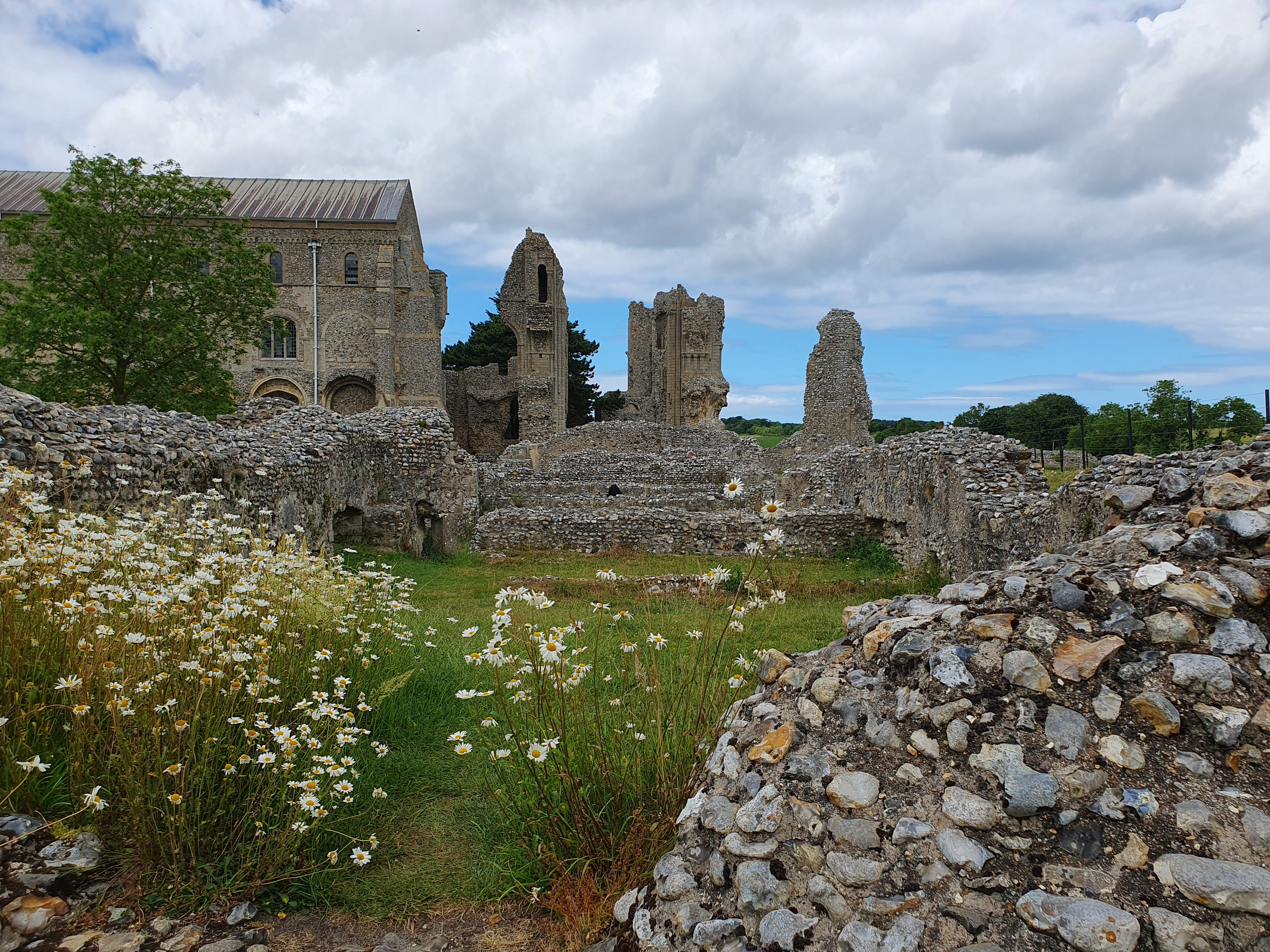
At Morley, the figure stands where it is not expected, visible not to those present, but to those watching from elsewhere, as though distance offers no barrier.
It appears without announcement, remains without movement, and vanishes without explanation, leaving behind not proof, but agreement.
At other times, and in other tellings, he is not still at all, but walking, passing along unseen routes, appearing briefly where no living man could easily go, and always with that same sense of purpose, as though he is not wandering but returning.
Norfolk has always had its hidden paths, its ways that are not marked but remembered, and it is not difficult to imagine that a man once taken from Morley, carried away across the county and confined elsewhere, might leave behind more than memory.
Some journeys, once made, do not entirely end, and some presences, once fixed in a place, do not remain where they were put.
So he appears, when he chooses, within walls or on screens, in stone or in shadow, and though explanations may be offered, and reason carefully applied, there remains the quiet fact that enough people, on one August evening in 1964, saw the same figure standing where no figure had been expected.
And that, in Norfolk, is often enough. Because a ghost does not need to be proven to persist: it only needs to be seen.
Shuck Zine Eight
You may, at last, lay aside the black crepe. Shuck Zine has not expired, nor drifted into obscurity, nor taken leave of its senses. It advances.
Slowly, yes. Reluctantly, at times. But undeniably forward.
Edition eight continues to concern itself with faeries, though I must again stress, for the benefit of the overly whimsical, that these are not the decorative creatures of garden centres and gift shops, but the older kind.
The contractual kind. The sort who keep accounts, observe thresholds and remember, with unnerving clarity, every kindness neglected and every slight delivered, however small.
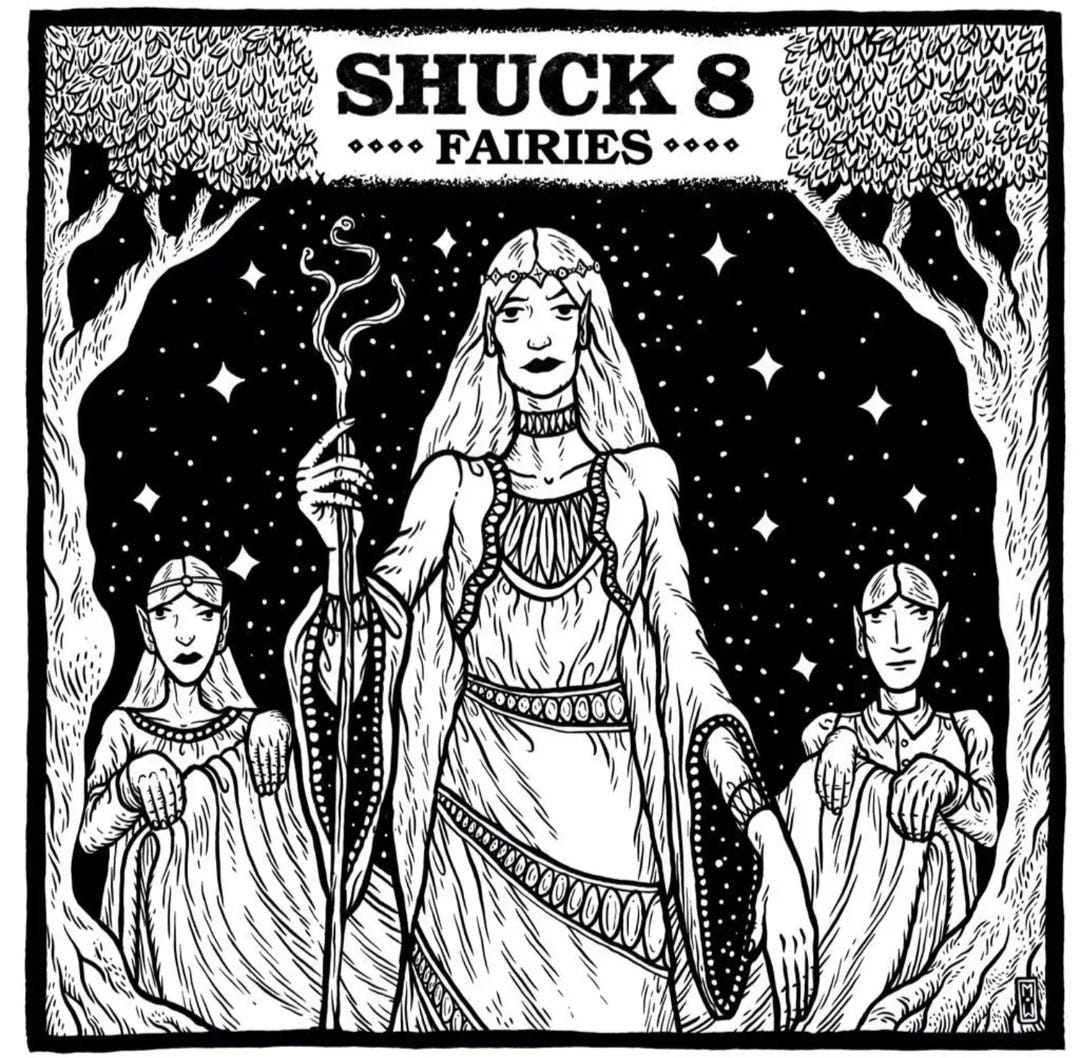
Since last I wrote, progress has been made: considerable progress, in fact, it would be unseemly to dwell upon the precise mechanisms by which this has been achieved, but let us say that a certain degree of…encouragement has been applied where necessary and that procrastination has found itself with increasingly limited room to linger.
I do not claim sole responsibility, of course, but neither will I go out of my way to refuse it.
As for myself, I stand now within sight of completion, with only one piece remaining to be coaxed into its final form, an interview with a human, no less. Thankfully he is worthy of my time. Just.
Shuck Eight is coming, friends. Hopefully before Midsummer’s Eve when the fae are at their busiest – it would be helpful in terms of our PR, methinks.
The Twelve Months of Shuck: when two local legends met
There are certain figures in Norfolk who feel fixed in place.
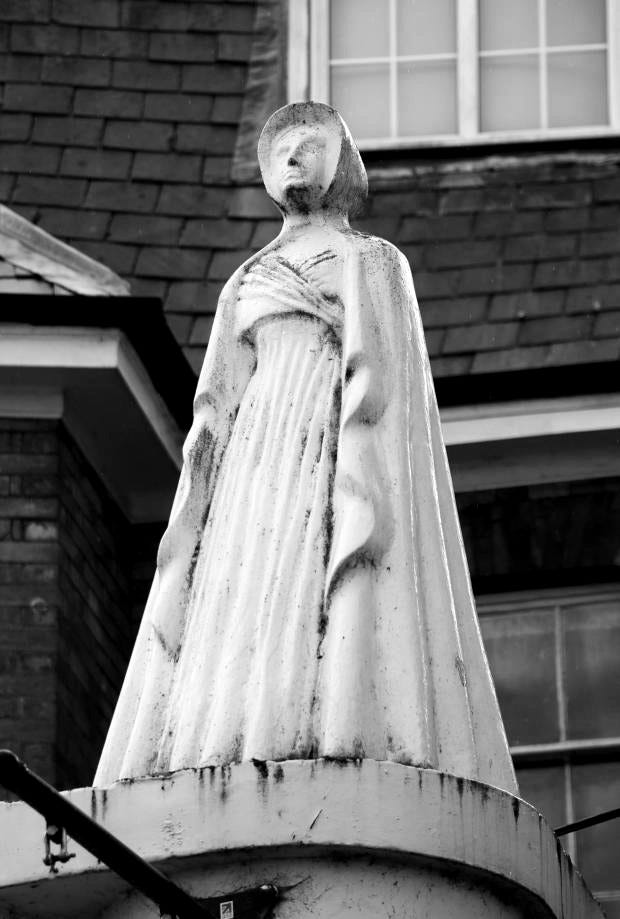
Amelia Opie is one of them: she stands, quite literally, above Norwich, looking out from her rooftop perch on the street that bears her name, a figure of conviction and clarity remembered for her words, her principles, and her refusal to look away from the injustices of her time.
Black Shuck is not fixed at all – he moves.
He slips between places, between shapes, between explanations, appearing where he is least wanted and most expected all at once.
Described as “as big as a calf and as noiseless as death,” he has haunted East Anglia since at least the 16th century, padding along coastlines and cutting across lanes, a creature shaped as much by fear as by sight.
Whether he brings warning or doom, whether he guards or hunts, seems to depend less on him and more on whoever happens to meet him.
It is not difficult to imagine that these two, so different in nature, might have passed within the same stretch of land.
In 1829, Amelia Opie travelled to Northrepps, just outside Cromer, to stay with her friend Anna Gurney, herself a formidable Norfolk woman and fellow abolitionist.
The village, quiet and self-contained, sits within easy reach of the coast, where the land begins to lift and the sea asserts itself in long, steady breaths.
It is here that the story takes a turn.
Writing later, Opie recalled a local belief, one spoken of with the kind of certainty that does not invite contradiction, that at twilight each evening a great dog was seen to pass beneath the wall of Overstrand churchyard, having come along the coast from Beeston.
Not a rumour, not a suggestion, but a thing observed, repeated, understood. This was no ordinary apparition.
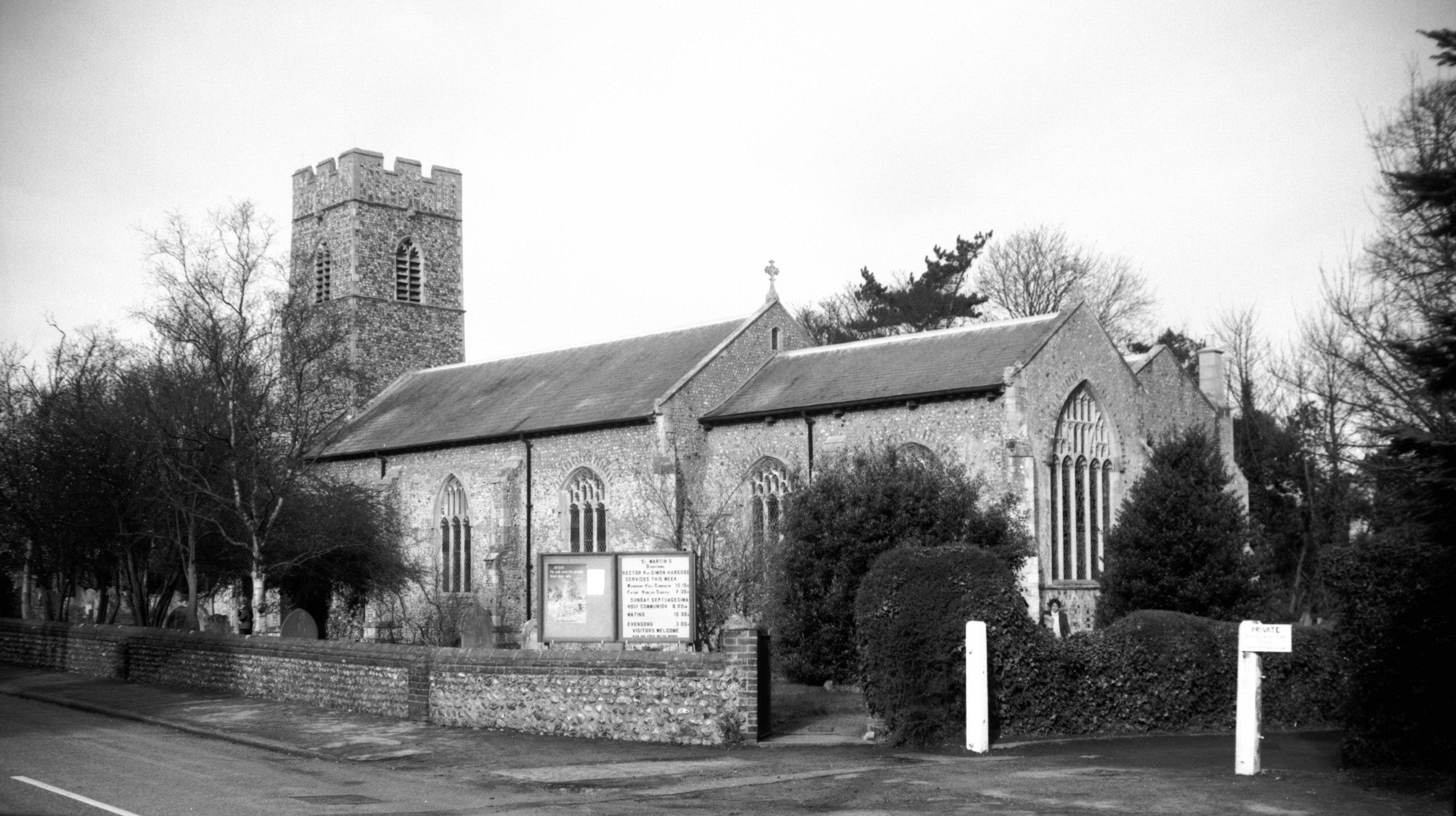
Unlike most ghosts, which are content to remain just beyond certainty, this one was said to be both visible and tangible, a creature that could be seen clearly and, more unsettlingly, felt.
Other accounts insisted that Shuck rose directly from the sea near Beeston Bump, that great swelling of land above the shoreline, before taking the path inland, following what became known, with admirable directness, as Shuck’s Lane.
From there, his route grows uncertain, as such routes tend to do.
He was seen pacing the hills near Overstrand, circling the village and then, with a kind of terrible familiarity, entering the churchyard before vanishing altogether, as though returning to a place that had been waiting for him.
The sightings were not rare.
A gamekeeper, described as sensible and not easily troubled, spoke of encountering the creature at dusk, close enough to place a hand upon it, only to recoil at the realisation of what stood before him.
He could face any poacher, he said, on two legs or four, but this was something else entirely - its back, he reported, was rough and hard beneath his hand, its presence undeniable.
Others elaborated.
Sometimes Shuck was seen with a head, sometimes without. His eyes, when present, were said to burn “as big as saucers,” and the ground beneath him was occasionally found scorched, carrying the sharp, metallic scent of brimstone.

Storms were known to follow in his wake, as though the air itself had been disturbed by his passing.
One local telling offers a different kind of sadness.
A Dane, a Saxon and their dog, Shuck, drowned together while fishing, their bodies carried apart by the tide. The men washed ashore in different places, Beeston and Overstrand, while the dog, faithful beyond death, continued to roam the coastline between them, searching still.
It is a softer explanation, but frankly, it does not quite hold.
And so we are left with the image: Amelia Opie, walking perhaps in the fading light, her mind occupied with matters of reform and humanity, staying in a house not far from where the land tips toward the sea.
And somewhere along that same stretch of coast, at the same hour, something large and dark moving with quiet purpose, following a path worn not into the earth, but into story.
Whether she saw him is not recorded. But one thing is certain: he was there.