

Shuckstack #40
August 2026

A Letter from Ada Nemesis
My persistent readers,
I am obliged to begin with an unfortunate admission: Percival remains here.
When I first agreed to take my nephew on for what was described as a brief period of work experience, I imagined he would spend a fortnight learning the rudiments of folklore journalism before departing to inflict himself upon some other unsuspecting editor.
Instead, he has somehow entered his third month and more alarmingly still, readers continue to write in his favour. Several have complimented his articles: one lady described him as “delightful” while another requested that he be taken on as Chief Writer.
I have elected to treat these letters as an anomaly and I should make it perfectly clear that I have not lost control of this publication.
The practical difficulty now lies in finding the young man suitable accommodation; he simply cannot remain in my villa indefinitely.
Quite apart from the alarming rate at which he consumes biscuits, his investigations into ghosts, fairy hills and haunted marshes have resulted in a marked decline in what we refer to as “presentability”.
He returns home smelling faintly of damp churches, extinguished candles and vegetation that has no business attaching itself to respectable trousers.
One evening last week I discovered he had convened a séance in my parlour.
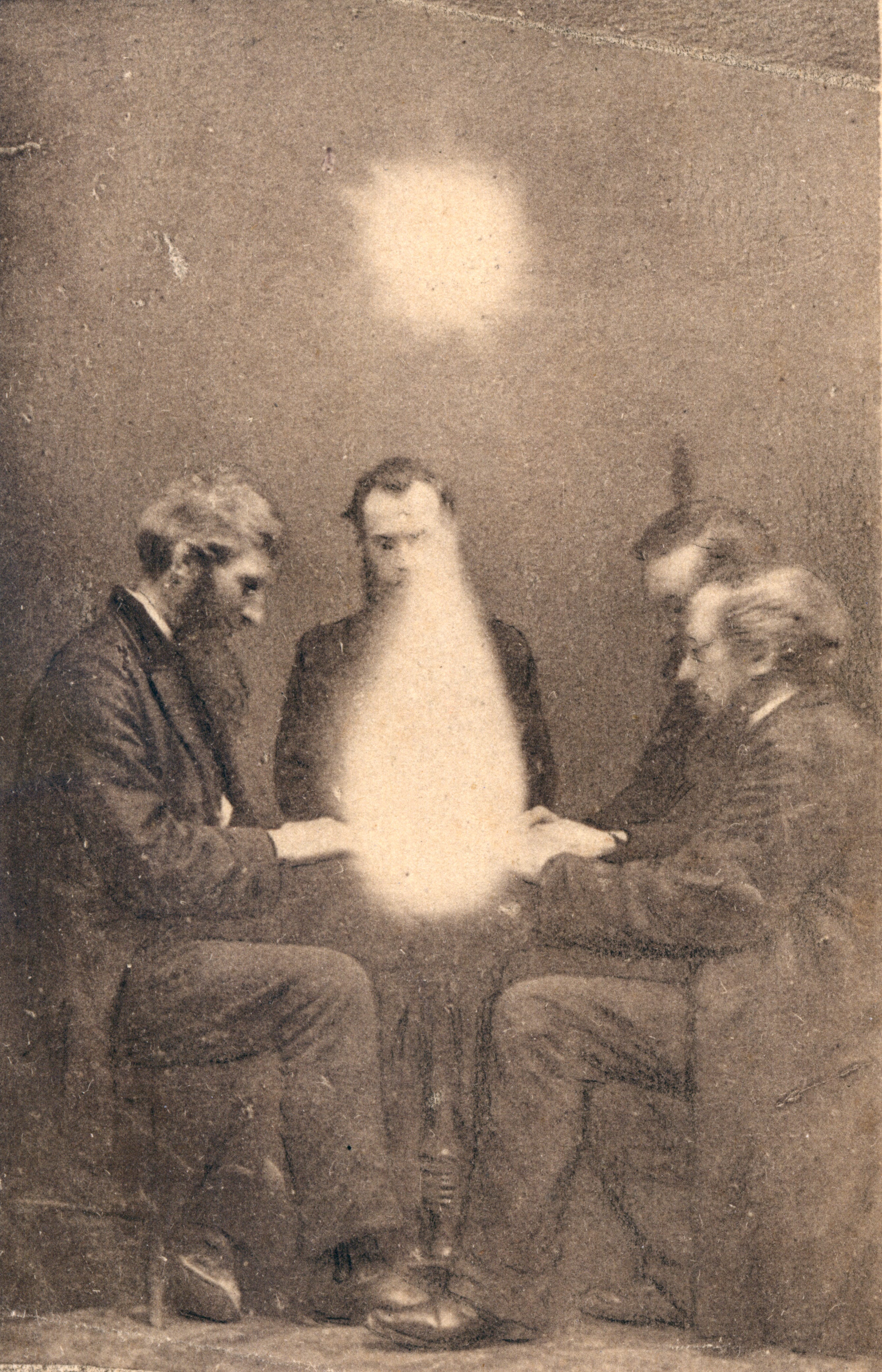
Not because he wished to communicate with the departed, you understand, but because he “wanted to see whether anything happened.”
Something did: I happened and the participants were shown the door with commendable efficiency.
As for myself, I have largely avoided unnecessary exertion during this latest spell of oppressive heat.
Summer remains my least favourite of the seasons, encouraging an entirely unhealthy enthusiasm for sunshine, picnics and optimism.
Even the ghosts appear less industrious, preferring, one suspects, to haunt only after dusk when temperatures become more agreeable.
I have therefore occupied my time in more sensible pursuits, including the colour-coding of my taxidermied insect collection, sheltering behind heavy curtains during the brighter hours and, on several occasions, standing beside lonely lakes wearing black and gazing thoughtfully into the middle distance.
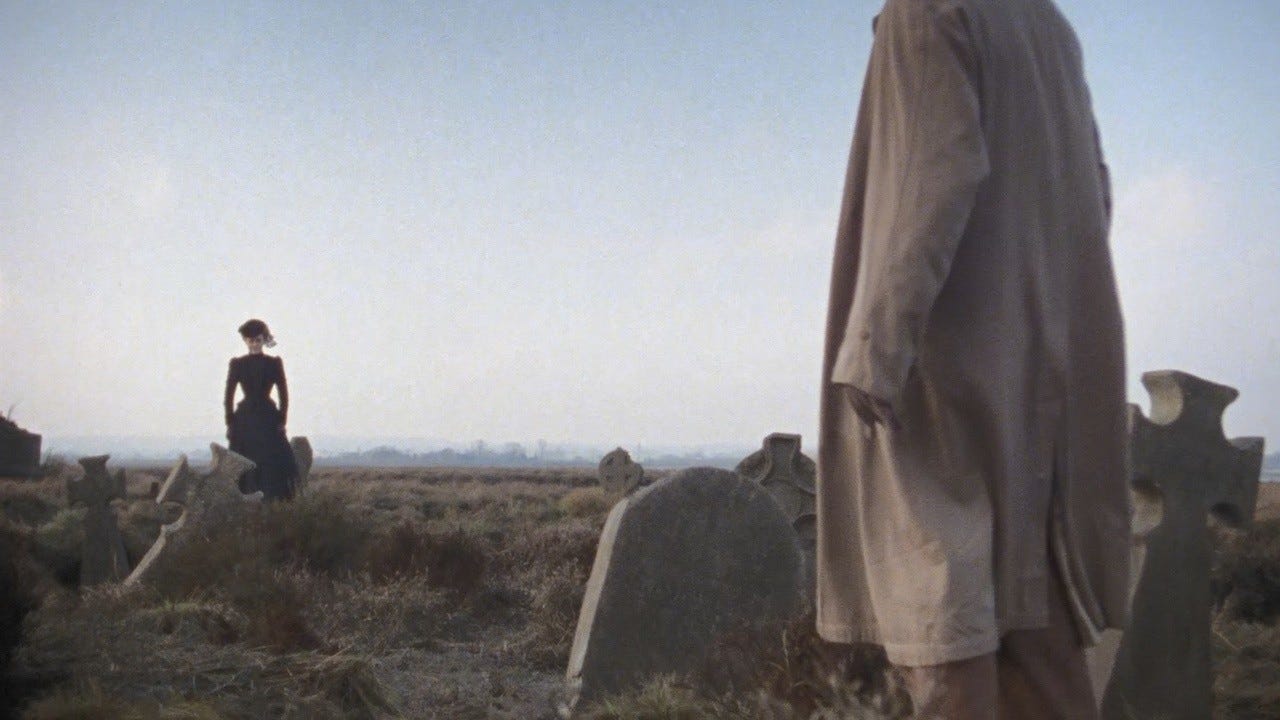
The effect upon passing walkers has been most gratifying. Several have fled and one gentleman appeared quite overcome and required the assistance of his wife.
It is pleasing to know that standards have not entirely slipped.
Fortunately, we have now crossed the midpoint of the year, the evenings are shortening almost imperceptibly and darkness is, once again, advancing upon us with admirable punctuality.
I find this deeply reassuring. Autumn possesses a seriousness of purpose that summer has always lacked, and before long the mist, the fallen leaves and the longer nights will return to restore the world to something approaching good sense.
Until next month, avoid amateur séances, never trust a fairy offering favourable terms and, should you glimpse a solitary lady dressed in black beside a secluded stretch of water, do remember that staring is extraordinarily impolite.
Ever yours,
Ada Nemesis
I am Percival Nemesis, temporary assistant editor, occasional correspondent and now, somewhat alarmingly, three months into what my aunt continues to describe as a temporary internship. I have begun to suspect that the word ‘temporary’ possesses a specialised editorial meaning with which the wider public is unfamiliar. My responsibilities have expanded to include ghosts, spectral hounds, haunted architecture, deadline management, tea-making, parcel carrying, unexplained errands and once, for reasons still unclear, holding a stuffed heron whilst Aunt Ada labelled moths. I remain unpaid, though Aunt assures me I am accumulating experience at a rate that will one day prove invaluable. Regrettably, experience remains unacceptable tender at bakeries, boarding houses and, rather disappointingly, public houses.
Extraordinary crimson-faced apparition repeatedly reported at Rollesby
By Percival Nemesis, Manor House Spectre Correspondent, Temporary Ballad Examiner and Opponent of Domestic Disagreements Involving Carpentry Tools
Residents of Rollesby may once have become accustomed to a rather unusual monthly engagement.
Not with the vicar, nor with the postman but with two ghosts.
The former Rollesby Hall, a handsome house dating from the middle of the 16th century before meeting the altogether less romantic wrecking ball during the 1950s (news imparted to me via my séance), was long reputed to harbour a pair of restless spirits known simply as Old Red Face and his unfortunate wife.
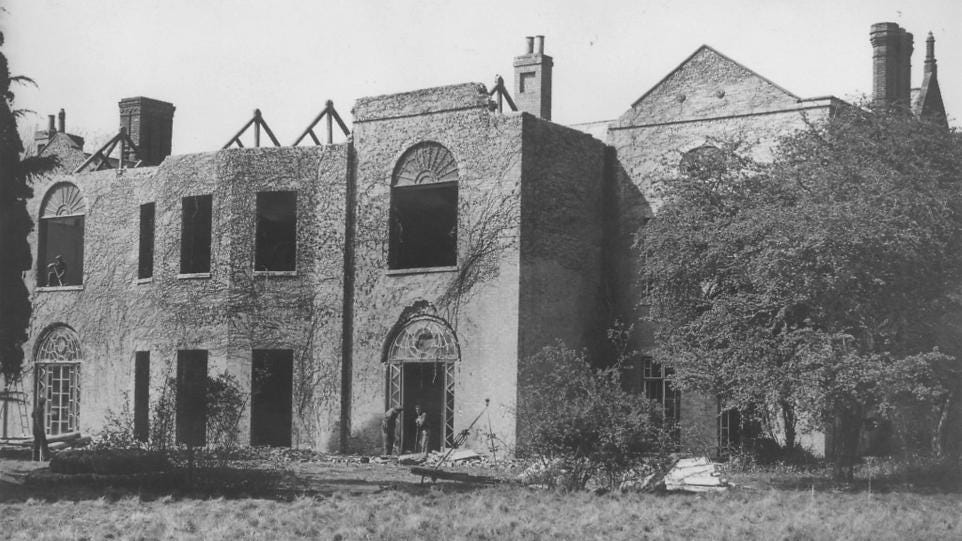
According to local tradition, the pair emerged upon the second Monday of every month at midnight, an arrangement which suggests that even ghosts appreciate a reliable timetable.
Precisely what befell the couple depends entirely upon whom one chooses to believe.
Fortunately, Norfolk possesses antiquaries.
The indefatigable Walter Rye recorded the legend in The Recreations of a Norfolk Antiquary, having himself borrowed the account from the 18th-century Norfolk historian Antony Norris of Barton Turf, thereby demonstrating that folklore, much like family recipes, is generally passed from one enthusiast to another.
The oldest version identifies Old Red Face as one of the Danish raiders, one of the feared “Red Danes”, who supposedly slew the Saxon lord of the manor during one of the many invasions of the Norfolk coast.
His victim’s wife, overcome with grief, was thereafter condemned to follow him through eternity, wringing her hands as they wandered the hall together.
It is an undeniably melancholy arrangement, although I am given to understand that following one’s husband about whilst quietly expressing disapproval is a pastime not entirely unknown among the living.
The alternative explanation is considerably less Danish and considerably more domestic.
Here, Old Red Face was said to have been a Cavalier whose wife possessed an enthusiasm for purchasing clothing and gewgaws beyond the allowance he had provided.
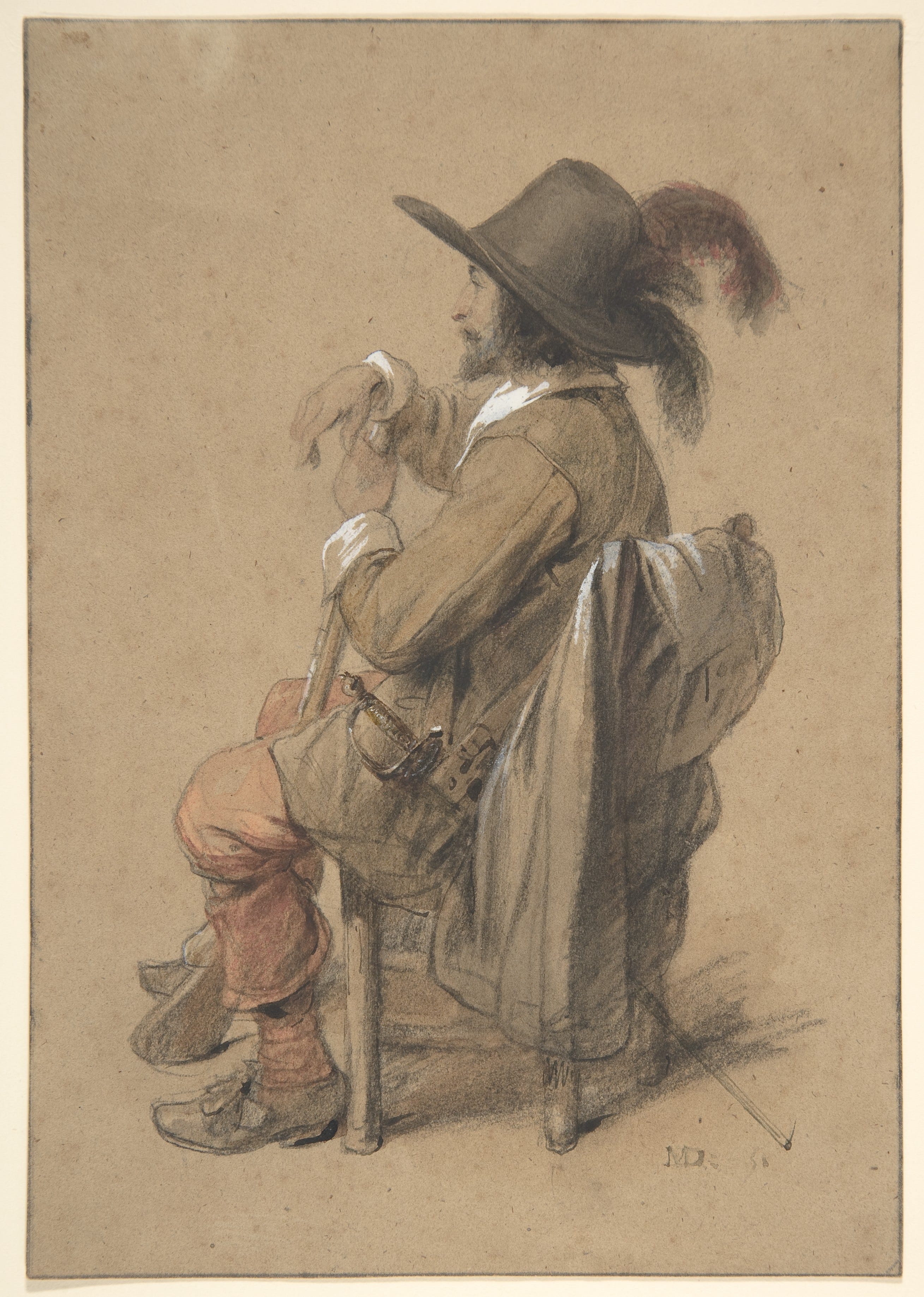
For readers unfamiliar with the term, a gewgaw is a decorative trifle of little practical use: Aunt Ada possesses rather a great many of them. Indeed, I sometimes suspect the structural integrity of her house depends less upon bricks than upon the mutual support of curiosities leaning against one another.
Walter Rye records, with a degree of practicality one rather admires, that the husband allegedly resolved the disagreement by cutting off his wife’s head with a handsaw, the resulting spray of blood permanently staining his face and earning him the memorable title of Old Red Face.
Rye himself was unconvinced.
While remarking that some might not consider punishment for extravagant shopping entirely disproportionate, he observed that removing a human head with so modest an implement seemed, from a purely engineering perspective, exceedingly unlikely.
One cannot help warming to a man who approached ghost stories with such careful attention to carpentry.
The Hall itself was once occupied by the Ensor family, a name which local tradition cheerfully insisted derived from the word “handsaw”.
This appears to be precisely the sort of explanation communities invent after sufficiently long, dull evenings around the fire. Whether linguists would agree remains doubtful.
The legend inspired a ballad which survived into the early twentieth century:
All round the rooms of Rollesby Hall, Roameth the wraith of a red-faced Dane, While from the blade of his good brown sword, Drippeth the blood of a murdered Thane. Follows him closely the dead man’s wife, Who loved her husband better than life. So will they walk till long years wane, And a brown sword cuts through the charm again.
As though one literary mystery were insufficient, another has attached itself to Rollesby Hall.
In the 1980s, Bernard Davies of the Sherlock Holmes Society of London suggested that the Hall may have inspired Donnithorpe Hall in Arthur Conan Doyle’s The Gloria Scott, the very adventure that first awakened Sherlock Holmes’ enthusiasm for detective work.
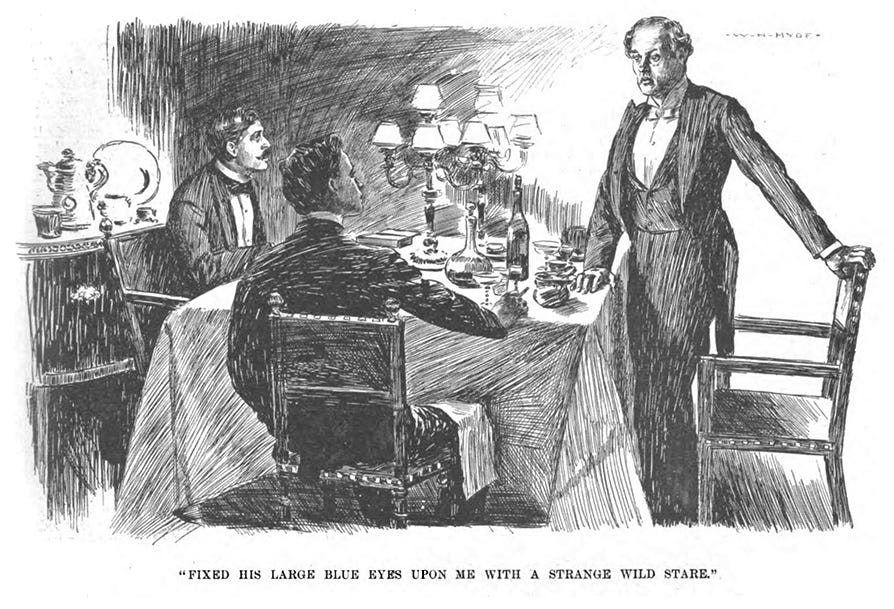
Davies reconstructed Victorian railway journeys, calculated horse-and-trap travelling times and even examined the direction of the setting sun in pursuit of his theory.
Holmes, however, never investigated Old Red Face. Had he done so, he would probably have concluded that there are only two possibilities.
Either Rollesby was haunted by a blood-soaked Danish invader pursued for eternity by the widow of the man he murdered...or somebody once spent far too long trying to explain why a ghost with a red face kept appearing on the second Monday of every month.
As is so often the case in folklore, both explanations possess their admirers.
Another Report on the Progress of Shuck Eight
By Percival Nemesis, Temporary Assistant Editor, Acting Deadline Observer and Individual Who Appears To Be The Only Person Concerned By Calendars
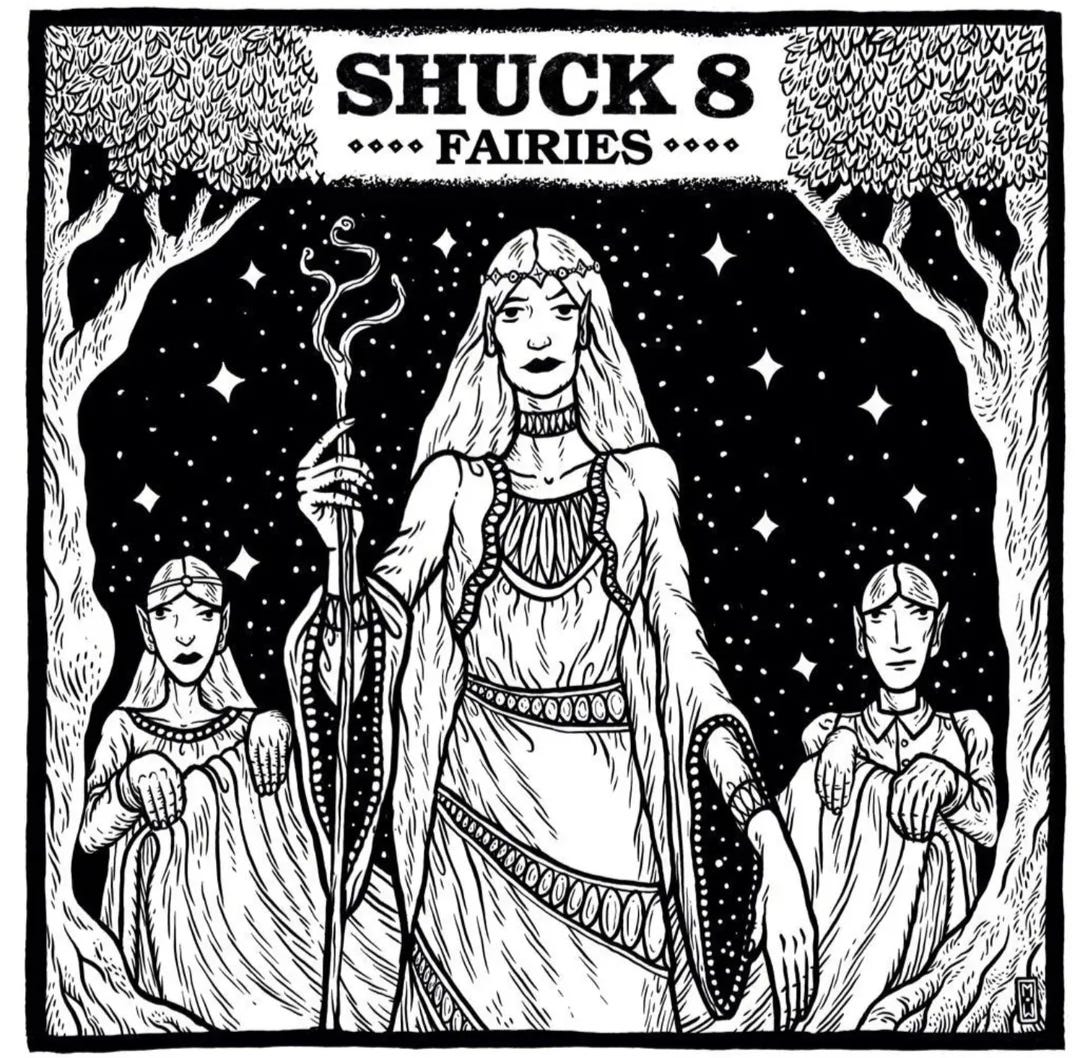
It has once again been brought to my attention, by a frankly astonishing number of correspondents, that readers would appreciate a further update on the progress of Shuck Eight: Fairies.
I would respectfully observe that I already issued an update. Twice.
One might reasonably suppose that an update would remain current for at least a little while before another became necessary, but apparently this is not the accepted editorial practice.
Readers continue to stop me in the street, send letters and, on one particularly memorable occasion, interrupt my luncheon beside an otherwise excellent tray of sandwiches to enquire whether the forthcoming fairy edition has finally appeared.
It has not.
The good news is that we are now, I am delighted to report yet again, within sight of the finish.
There remain only a handful of pages to design before Shuck Eight can finally flutter into the world like one of the very creatures it celebrates.
As I value both my internship and my continued occupation of my Aunt’s spare bedroom, I will simply remark that certain editors possess an admirably relaxed relationship with deadlines.
When I miss one, I receive a lecture while if Aunt Ada misses one, she announces that time itself is an artificial construct and continues drinking tea.
This has proven difficult to challenge.
Nevertheless, I remain optimistic: the pages are being assembled, the final details are falling into place, the editorial sighing has become noticeably less frequent.
I therefore feel quietly confident that readers shall soon have Shuck Eight in their hands.
Should that prediction prove inaccurate, I shall naturally issue another progress report as I understand they have become rather popular.
Peculiar ecclesiastical bell-ringing reported from the vanished village of Egmere
By Percival Nemesis, Pilgrimage Correspondent, Temporary Campanologist and Firm Believer That Invisible Travellers Should Still Observe Reasonable Hours
There are many unsettling sounds one might reasonably expect to encounter in the Norfolk countryside after dark.
Owls. Foxes. The occasional hedgehog conducting what sounds remarkably like an argument – or a love affair - with a biscuit packet.
Church bells, however, generally require a church and this is where the tale that regards Egmere, near Walsingham, becomes unnecessarily complicated.
Just a few miles from Little Walsingham stand the lonely remains of St Edmund’s Church, all that survives of a medieval village almost entirely erased by plague, changing fortunes and an enthusiastic preference for sheep over people.
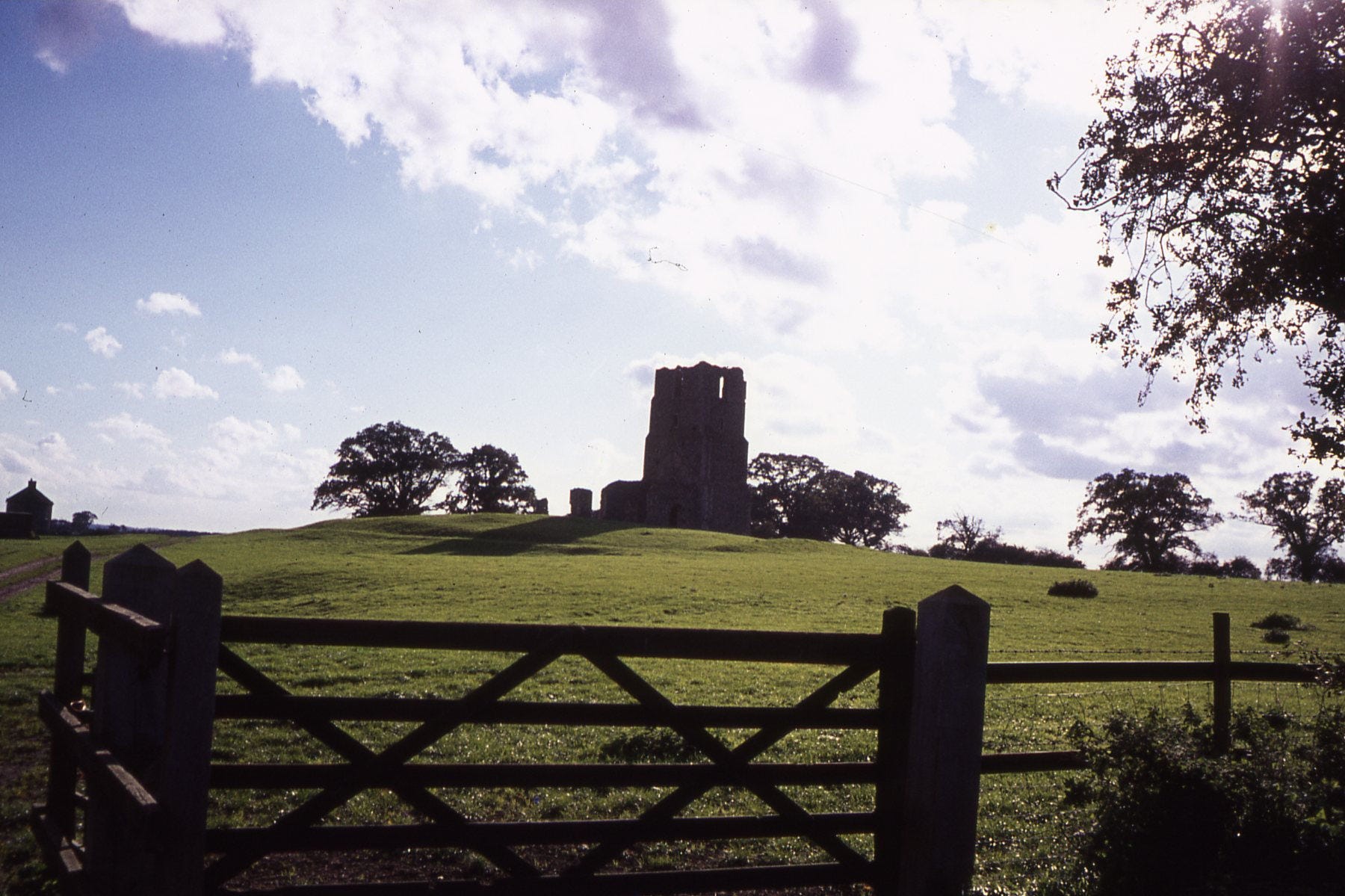
The houses have vanished, the villagers have vanished, even much of the church has vanished – and yet, bells, according to local tradition, continue to ring.
Not great peals from the tower, but the soft chiming of dozens of little handbells drifting through the darkness.
Witnesses speak of hearing an invisible procession approaching the shrine at Walsingham, the pilgrims themselves nowhere to be seen, only the gentle music of their journey carrying across the fields.
The explanation, naturally, depends upon which legend one prefers.
Some say the bells belong to medieval pilgrims making their final approach to England’s greatest shrine dedicated to Our Lady.
Egmere stood upon one of the principal routes into Walsingham and would have formed one of the final stopping places before travellers reached the Holy House itself.
For medieval pilgrims, bells were far more than cheerful accessories.
Some were purchased as treasured souvenirs to prove a pilgrimage had been completed or worn to drive away evil spirits, witches and whatever else might be lurking beside lonely roads after sunset.
Entire groups reportedly rang bells, blew horns and sang as they travelled, partly for celebration and partly so nobody became separated along the journey.
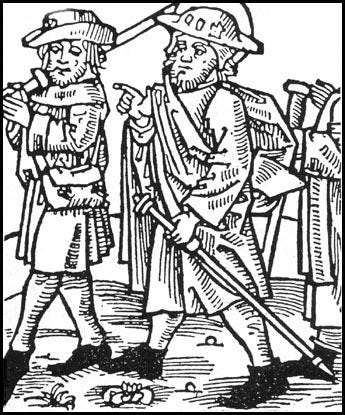
One suspects it also made locating the slower members of the party considerably easier.
Others tell a sadder story: they say the invisible bells belong not to healthy pilgrims but to sufferers of leprosy.
Church law required those afflicted with the disease to carry bells or wooden clappers to warn others of their approach.
The sound that drifts across Egmere, therefore, may not be one of joyful expectation at all, but of lonely souls making one final desperate journey in search of miraculous healing.
It is difficult to imagine a more melancholy procession.
The Black Death devastated Egmere during 14th century, reducing a thriving village to little more than a memory.
As the years passed, sheep replaced people, cottages disappeared, the church became a barn and eventually even that fell into ruin.
Today only the tower stands watch over empty fields where hundreds of footsteps once passed each year on their way to Walsingham.
Perhaps places remember and after enough centuries, perhaps roads grow accustomed to pilgrims and fields become reluctant to surrender the sounds they once heard every day.
Or perhaps, on quiet evenings when the wind is carrying just enough moisture from the coast and the light begins to fade, imagination simply becomes unusually sensitive to distant noises.
This correspondent has no firm opinion.
Although I will confess that should I ever hear the faint ringing of unseen handbells approaching through the mist, I shall almost certainly step politely to one side of the path.
Shucks of (near) Norfolk (actually Suffolk, AGAIN): The Galleytrot
By Percival Nemesis, Black Dog Correspondent, Temporary Suffolk Apologist and Firm Believer That Spectral Hounds Ought to Settle Upon One Appearance
Readers have once again caught me venturing across the Norfolk border: I can only apologise.
I am fully aware that a column entitled Shucks of Norfolk is expected to concern itself primarily with Norfolk. Yet Suffolk persists in producing giant ghostly dogs with an enthusiasm that is becoming increasingly difficult to ignore.
This month we encounter perhaps the most perplexing member of East Anglia’s ever-expanding family of supernatural hounds.
The Galleytrot. Quite what a Galleytrot actually is depends entirely upon whom one asks: some describe an enormous white dog, others insist it is black, some say it lives beneath hollow hills alongside the fairies, others report it stalking churchyards, lonely lanes and marshes in pursuit of the unwary.
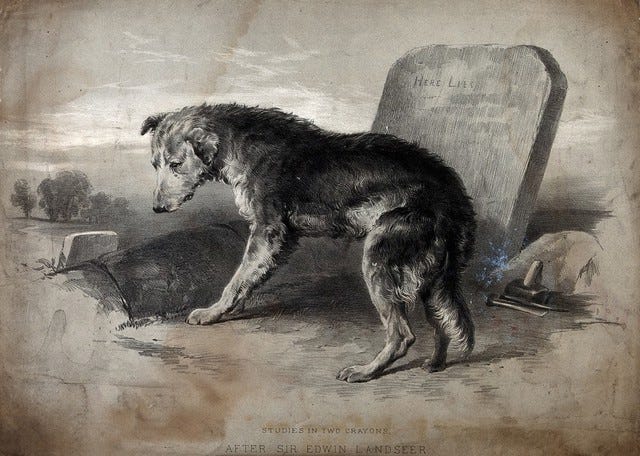
As methods of identification go, this leaves something to be desired.
Nevertheless, there seems little doubt that for generations the people of Suffolk have been entirely convinced that something large, canine and deeply unpleasant has been wandering about after dark.
The creature is particularly associated with Walberswick and the melancholy remains of old Dunwich, where stories of phantom dogs appear almost as frequently as new branch openings of Joules, FatFace or Seasalt Cornwall.
Indeed, Walberswick Common seems to have accumulated Black Dog reports with the same enthusiasm that some villages collect parish notices.
One local lady confessed she encountered the beast only once: “quite enough,” she concluded, and this correspondent feels little improvement can be made upon that assessment.
Another witness described seeing a phantom dog “the size of a calf”, while others reported the creature pacing silently behind hedges, keeping perfect step with travellers before disappearing without so much as disturbing a leaf.
One coastguard even fired his revolver at the beast as it crossed the road before dawn (the Galleytrot, displaying what one must admire as complete professional indifference, carried on regardless).
Perhaps the most remarkable encounter occurred during the Second World War. An American airman and his wife had rented a modest hut beside Walberswick Marsh while he served at a nearby airfield, accommodation which today would almost certainly be marketed as a “rustic coastal retreat” at a price roughly equivalent to a fortnight in the Maldives.
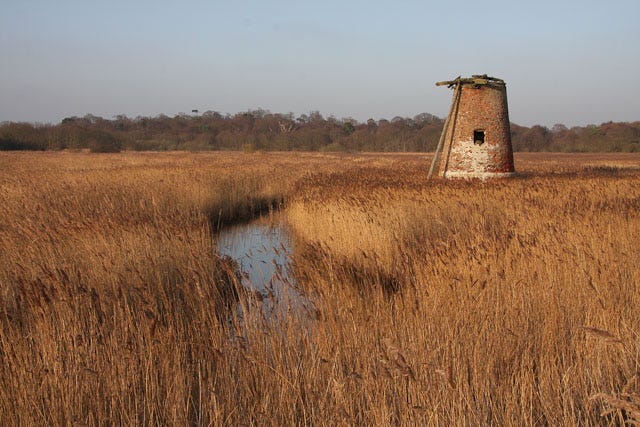
One stormy evening an urgent pounding shook the door: naturally, they assumed some unfortunate soul had become caught in the weather and the airman peered through the window to see.
There was an enormous black dog throwing itself bodily against the hut.
The terrified couple barricaded the door with what little furniture they possessed while the creature hurled itself against the walls and then onto the roof.
The assault continued for several hours while the occupants waited in understandable terror for daylight. At dawn the pounding ceased.
Expecting splintered timber, broken windows and pawprints surrounding the hut, they cautiously stepped outside: there was nothing. No damage, no footprints, not even a claw mark in the soft earth.
The locals listened patiently before explaining that the couple had merely encountered the Galleytrot. One imagines this was intended to be reassuring.
The beast also appears to favour Leiston Churchyard, where Lady Walsingham and Lady Rendlesham once undertook what can only be described as an unusually adventurous evening’s entertainment.
Rather than attending dinner parties or musicales, the ladies chose to sit among the gravestones at midnight in the hope of seeing a ghostly dog.
Remarkably, they succeeded.
James Wentworth Day records that the great black animal came silently along the road, leapt effortlessly over the churchyard wall and disappeared among the graves.
In another account, he describes it rather beautifully as a “slinking sable shadow” that slipped away “like an evil whisper.”
Readers should note that very few ordinary dogs are described in such language. Since discovering the works of James Wentworth Day, however, I have become convinced that absolutely everything ought to be described in such language.
(Editor’s note: “Please stop this nonsense. This morning I heard you describe the milkman as “a pale emissary of the morning mist.’” This MUST end)
The Galleytrot’s habits are no more encouraging than its appearance.
According to legend it sometimes waits outside houses where somebody is gravely ill, remaining there until death finally claims the occupant, elsewhere it lurks beside lonely roads before hunting unfortunate travellers who have made the regrettable decision to walk home after dark.
This seems rather severe punishment for preferring fresh air to a horse and trap.
Meanwhile, in 2014, archaeologists excavating Leiston Abbey uncovered the skeleton of an enormous dog nearly seven feet in length.
For a glorious few days, speculation flourished that Shuck himself had at last been discovered, but alas, careful examination suggested something altogether more touching.
The animal appeared to have been buried with considerable care, perhaps a much-loved companion rather than East Anglia’s most notorious phantom.
There is something rather comforting about the idea that even 16th-century monks occasionally became fond of exceptionally large dogs.
As for the Galleytrot, however...I remain unconvinced that we have heard the last of him.
A creature capable of being white, black, fairy, phantom, churchyard guardian and roadside man-eater, sometimes all at once, strikes me as far too adaptable to have disappeared entirely.
If you should find yourself walking across Walberswick Common after sunset and become aware of large silent footsteps behind you, it may be prudent not to look back immediately.
On the other hand, running away from the supernatural has rarely made matters worse.